


The Role of a Licensed Insolvency Trustee in Mississauga
The role of a Licensed Insolvency Trustee in bankruptcy Mississauga is critical in helping consumers who choose to go through the process of filing for bankruptcy to solve their overwhelming debt problems. Not only do they play a very big part in helping to minimize confusion, but they are present from beginning to end to make sure that every step of the process gets done as quickly and efficiently as possible.

Licensed Insolvency Trustees (LITs) are the only professionals licensed by the Federal Government of Canada to provide debtor information and advice to individuals and businesses with debt problems to help them make informed choices to deal with their financial difficulties. In addition, they are the only ones permitted by law to provide and perform debt restructuring services under the Bankruptcy & insolvency Act (BIA).
Licensed Insolvency Trustees in bankruptcy Mississauga were previously called bankruptcy trustees, or trustees in bankruptcy. The Office of the Superintendent of Bankruptcy Canada has recently changed their designation from bankruptcy trustee to Licensed Insolvency Trustee (LIT) in order to clearly differentiate them from debt consultants who are not licensed by the federal government to provide debt services.
The new designation is important to help eliminate any confusion or doubt among consumers about the legitimacy of LIT’s to provide government programs to eliminate debt. When dealing with a Licensed Insolvency Trustee, consumers are protected in three ways:
The Canadian government regulates the insolvency profession and ensures that Trustees are efficient and effective in complying with the insolvency process.
The Code of Ethics for Trustees establishes a standard for services that they are required to provide to a business or individual who has filed for bankruptcy.
The laws regulating the insolvency process makes sure that both the debtor’s rights and the creditor’s rights are respected.
In Mississauga, a Licensed Insolvency Trustee can provide a wide range of debt management solutions, including consumer proposals, loan consolidations, and bankruptcies. Insolvency Trustees are the most highly trained and educated debt experts that you can talk to. In most cases, trustees have obtained a university degree and most of them hold an accounting designation. For licensing, all trustees are required to complete a three-year bankruptcy and law course, pass a comprehensive oral examination, and undergo background investigation by the federal and national police force of Canada (the Royal Canadian Mounted Police). Only trustees who are licensed by the Office of the Superintendent of Bankruptcy Canada (OSB) can hold the designation of Licensed Insolvency Trustees.
Their role as debt professionals include the following:
- Provide free initial consultation to review your financial situation
- Explain to you in detail all your debt relief options, not just bankruptcy
- Recommend the best debt management solution that is best to your situation, which may or may not include any type of insolvency solution provided by the Bankruptcy & Insolvency Act
- Administer consumer proposals and bankruptcies and manage assets held in trust
- Gather all vital information to file the necessary documents and start insolvency proceedings
- Notify your creditors, accept and review all claims and administer the rules of the process
- Apply for your discharge or completion certificate once you’ve completed all your duties
- Ensure that everyone complies with their duties and responsibilities under the law.
If you are deep in debt and are getting harassed by non-stop collection calls and wage garnishments, consulting with a trustee is the most risk-free and inexpensive option you can take towards the right direction. A Licensed Insolvency Trustee in Mississauga can help you determine which debt relief option is best for you and your family so you can be on the road towards a debt free life.
What Happens If My Employer Declares Bankruptcy?

In this video, Richard Killen, Licensed Insolvency Trustee based in Toronto, Scarborough, and 8 other debt relief locations in Ontario talks about what happens if your employer declares bankruptcy.
If you find yourself out of work because your employer has gone bankrupt the first thing you need to do is contact the Licensed Insolvency Trustee handling the bankruptcy. Among other things you can file a claim with the trustee to ensure that you obtain your proper documentation and if he/she has the funds, you can receive your share.
The trustee can also direct you to the appropriate government agencies set up to handle funds set aside to help people in such situations. However, you must register with them.
Should you find yourself in financial difficulties due to your job loss and you are drowning in debt, consider having a conversation with Richard or one of the other Licenced Insolvency Trustees. You will be glad you made the call.
There is no cost for your initial meeting and we will explain all of your options to you. We can meet with you during business hours or book after hours appointments if that is more convenient. Richard Killen and Associates is a Licensed Insolvency Trustee in Scarborough and have 10 locations across the Greater Toronto Area. Call us at (416) 285-9511
Bankruptcy Counselors Toronto vs Licensed Insolvency Trustee

It almost sounds funny, doesn’t it? Bankruptcy Counselors Toronto – somebody who counsels people, presumably in Toronto, on how to go bankrupt? Perhaps the term is misleading? I think so. Real Bankruptcy Counselors, in Toronto or elsewhere, don’t counsel people to go bankrupt. In fact a Bankruptcy Counselor would probably spend more time trying to figure out how the person seeking advice could stay out of bankruptcy rather than go in it.
The term Bankruptcy Counselor itself is probably incorrect, at least in terms of the title itself. There are no Bankruptcy Counselors in that sense. What we do have are Licensed Insolvency Trustees in bankruptcy, such as Richard Killen & Associates Ltd., who are Federally licensed to administer the legal process called bankruptcy, along with other processes under the Bankruptcy and Insolvency Act called proposals and Consumer Proposals.

But a Trustee (it’s quite a mouthful to keep saying Licensed Insolvency Trustee when you are writing an article) is uniquely placed to talk to a person in debt trouble about bankruptcy, or a consumer proposal, as an option to deal with their debt problems. The Trustee can explain in detail how they work, how they might apply to that person’s situation, what the short term, medium term and long term practical advantages and disadvantages are. What effect they may have on all kinds of practical situations such as employment, bonding, mortgage renewals, and so forth. There are so many questions and so many areas of concern that people have when they are trying to solve their debt problems.
Let’s face it. Nobody actually wants to go bankrupt and making a consumer proposal is not much higher on a person’s to do list, is it? And let’s face something else. Though nobody wants debt trouble, it does happen. In today’s world of relatively easy access to consumer credit such as credit cards and lines of credit, not to mention mortgages and car loans, is it any wonder people get into debt trouble. This is not to say that we are not responsible for our actions, but not everyone can live every moment of their life within the proper bounds of prudence and coldly logical decision-making. Being human emotions come into play and do make some financial decisions without properly thinking it through. Later if something bad happens, like losing a job or coming down with an injury or an illness, what is a person supposed to do?
The answer, of course, is to do the best they can. That’s what most people do.- the best they can. But, if things go from bad to worse, there will come a time when the best they can is no longer good enough for their creditors, who simply want to get paid. When it gets to that point, there are not that many options available. In fact, depending on the severity of the trouble (How far behind you are with your payments? Are creditors threatening legal action?) there may only be one way that the person can maintain some control over his or her situation: use the Bankruptcy and Insolvency Act.
But using the solutions provided by a federal law is not something you should go into on a wing and a prayer. A little information might be in order and this information will have to come from someone who knows all sides of it. That is what the Licensed Insolvency Trustee (I used the whole title here so I could explain it) is supposed to be – the go to guy. Let’s look at what the title means and how it might relate to the term Bankruptcy Counselors Toronto.
“Licensed” simply refers to the fact that the Federal government, through the agency of the Office of the Superintendent of Bankruptcy, is mandated by law to oversee the administration of each and every bankruptcy and proposal filed in Canada. The law though says that a Trustee must be appointed to actually do the administration of each bankruptcy or proposal. So, the OSB determines who is qualified to be a Trustee through a series of investigation and heavy-duty testing and then licences those people it deems qualified to handle the job. That’s when they issue a licence.
“Insolvency” refers to the fact that this Trustee’s licence is specifically intended to relate to matters covered by the Bankruptcy and Insolvency Act. Let’s face it, the term trustee is used far and wide. For instance there are school trustees, who I am sure would not want to be confused with Insolvency Trustees. So the word Insolvency is stuck right in the middle to make it clear that these individuals are qualified specifically in that area and that they have been tested as to their ability to provide that service.
“Trustee” has a very broad meaning. The dictionary says a Trustee is a person given powers of administration over property and is legally bound to administer it solely for the purposes specified, in this case by the Bankruptcy and Insolvency Act. So in English that would appear to mean that a Trustee is responsible to administer the bankruptcy (and proposal) process for the purposes intended. Though that might cover a lot of ground, advising people about Bankruptcy or Proposals would certainly fall within that sphere.
All of which brings us back to the term Bankruptcy Counselor Toronto. If you are in debt trouble, facing a financial crisis, and you realize the fact, what can you do about it?
The first thing I think any rational person would do is get information, maybe advice. You can ask relatives and friends, but other than getting a little moral support, that may not prove too helpful. You can always consult a professional person such as a lawyer or an accountant. Either of these can be a good move, but may not be enough. An accountant generally deals in financial situations that have not yet gone off the rails, so to speak. He can recognize the negative reality of your situation, but may not know enough of the details of the options available to design a specific plan to get you out of trouble. Of course that depends on how bad the situation has become.
A lawyer is usually there to give a different kind of advice. In fact, unless you consult a lawyer specializing in insolvency matters there will likely be a practical limit to what a solicitor can do to help, again depending on how far things have deteriorated.
A financial consultant is likely to be a bit like an accountant in that he’s used to dealing with solvent situations and will not have a fluency with the practical and administrative details of the options available to you if your situation has become insolvent.
So we come back to the Licensed Insolvency Trustee as the only truly qualified Bankruptcy Counselor Toronto, or any other place.
If you need advice about what to do now that you have, or are about to fall behind with your credit card and other debt payments and want to retain some kind of control over your situation, the Licensed Insolvency Trustee is the go to guy. As a Bankruptcy Counselor Toronto, or elsewhere, the Trustee will not be your advocate like a lawyer would, but at Richard Killen & associates Ltd. we provide financial debt counselling services where in we will analyze your situation and explain it to you in understandable terms so that you can know what will be the best option for you to take to resolve the problem in a dignified and responsible manner. Is there a better way to take care of a problem?
Insolvency Solutions and Information on the Internet

You are probably reading this on our website. Everybody nowadays seems to use the internet to look things up and research matters of interest to them. Insolvency solutions (bankruptcies and consumer proposals) are not an exception.
There are a thousand different things that could be said on a website or through social media about debt problems and the various solutions available to those in need of them. Information is information and the internet is wonderful at giving almost instant access to it. How many times have you been on Wikipedia this week?
However, the internet has its limitations, at least for now. The main thing it can do is provide objective information, facts, data. What it can’t do is provide diagnostic opinion in areas which are not confined to objective facts and figures. Let me give this example in our area of professional expertise.

We are often asked by folks who consult us about their debt problems whether or not they will lose their house if they go bankrupt or do a consumer proposal. (This is one of the primary concerns home owners in debt trouble have, as you can well imagine.) They looked it up on the internet and learned lot about the legal position of the Licensed Insolvency Trustee. In fact, the internet would likely be very black and white about the matter. What they will find out when they come in for a FREE consultation at Richard Killen & Associates is that the issue is much more grey than black and white.
The law provides the trustee with a fair amount of latitude in dealing with the disposition of property and should the debtor want to keep his house he most often does, albeit at a cost. Only the trustee can properly explain this and then only after he has properly assessed the debtor’s entire situation.
The objectives of the Bankruptcy and Insolvency Act are not one-sided. It seeks to provide an equitable justice for all the parties and this cannot be properly shown by a simple interpretation of a statute. That’s why no matter what data the internet might provide, explanations that truly matter to people can only be provided by a Licensed Insolvency Trustee – like Richard Killen & Associates.
So, if any of this has personal meaning for you, phone or email us now for a FREE consultation and get the full perspective and proper answers to all your questions. Remember, it may be the most stress-relieving call you ever make.
Richard Killen
Licensed Insolvency Trustee
Consumer Proposal Vs Bankruptcy – What Is the Difference?
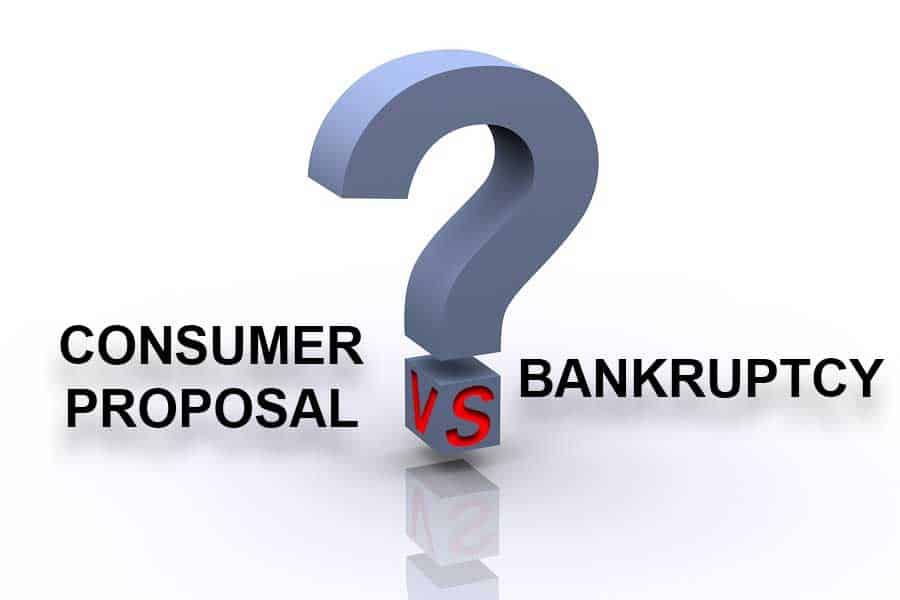
What is the difference between Bankruptcy and Consumer Proposal is a common question we hear all the time so today let’s do a comparison of consumer proposal vs bankruptcy.
I’ve been in the insolvency business discussing bankruptcy in Toronto for over 30 years and in all that time I don’t ever remember meeting anyone who wanted to actually go bankrupt. Let’s face it, who would? I have met an awful lot of people who did realize and accepted that bankruptcy was the solution they needed. But, going bankrupt had not been on their to-do list.
It is a common topic when choosing a debt relief solution. I know the vast majority of people who come to our office would greatly prefer to solve their debt problems in some way other than filing for bankruptcy. Many choose a consumer proposal or some other kind of debt consolidation versus personal bankruptcy. Ultimately, it boils down to finding out what options are available for you, what the consequences will be, and then deciding what is best for you and your family.
What is the difference between consumer proposal and bankruptcy?
A consumer proposal is a settlement made between you and the lender with the assistance of a Licensed Insolvency Trustee. The trustee will facilitate the negotiation between you and the creditor concerning the repayment terms. The agreement includes paying a reduced amount of your total debt owed within a certain period, usually five years. Once the agreement has been finalized, the creditors will not be able to take a portion of your income. Moreover, the interest on your debt will stop immediately.
On the other hand, bankruptcy involves taking over your assets to settle your debt with specific exemptions. Your Licensed Insolvency Trustee will work with you upon deciding to file bankruptcy, which is governed by the federal government. By declaring bankruptcy, your creditors can no longer go after you and you can have a fresh start in your financial goals upon relieving yourself from your debt. This is after completing your duties. However, no one wants to go bankrupt but depending on your financial struggles, this could also be the best solution to your debt problem.
Bankruptcy versus Consumer Proposal: How can you decide which best is for you?
A lot of things have to be considered when choosing between the two options. Do you want to keep most if not all your assets? If yes, you should consider going for a consumer proposal. There are also differences in the payment terms. A consumer proposal differs from bankruptcy in the sense that it requires a regular and fixed amount of payment based on what you agreed upon with your creditors. As with bankruptcy, you will be obligated to pay an amount based on your salary and other factors. A proposal will also have a lesser impact on your credit score but will still have an impact. Filing bankruptcy will make you debt-free faster than a consumer proposal.
The first step in making this work is to talk to a Licensed Insolvency Trustee. A trustee is licensed by the federal government with the duty to assess your situation for you and explain all the options and consequences. Once you know what paths are available and where they will lead, you can decide which one to take. Though the decision must be yours, their job is to make things as clear to you as possible so you can make the best choice for your financial situation.
Now here’s the neat part. That consultation with Richard Killen & Associates is FREE- no charge, no strings attached. Not a bad price for the kind of empowerment a person with debt problems wonders if she or he will ever find.
So don’t stew about those bills anymore. Call us or contact us by email and make an appointment for that free consultation. Remember, it may be the most stress-relieving call you ever make.
One of our Licensed Insolvency Trustees will explain the difference between bankruptcy and consumer proposal, and the pros and cons of each, however, ultimately, it’s up to you to decide on a bankruptcy vs consumer proposal to solve your debt problems.
A New Name – Licensed Insolvency Trustee
 The bankruptcy and proposal business is going to have a new player – at least it will appear that way. Since 1920 Trustees have had the title “Trustee in Bankruptcy”. Effective April 1st, 2016, Trustees are going to have a new name. We will be called “Licensed Insolvency Trustees”.
Actually this change has been coming for some time. Over the past 25 years the insolvency business has changed considerably. Trustees, who used to primarily handle bankruptcies and some business receiverships, have gradually morphed into people who do a lot more than that.
On the corporate side we have become the go-to people for effective restructuring when a company gets into certain kinds of trouble, but does not want to close their doors. This might mean re-organizing via a corporate proposal, or the use of the Company Creditors Arrangement Act, or even informal restructuring and deal-making. In other words as expansive a menu of solutions as the imagination and skills of a Trustee can supply to try to save the business.
On the personal or human side, Trustees have become the go-to people to provide the kind of knowledge an insolvent individual needs to achieve financial rehabilitation.
An insolvent person is by definition a person who can no longer keep all his creditors happy all the time – can’t keep all his debt payments up to date. This is usually disastrous for that person. A Trustee is uniquely placed to be able to provide that person with the tools to solve his problems. These might involve a bankruptcy solution or a consumer proposal in Toronto, or a more informal option. But the real solution will be that the insolvent person will have the chance to re-take control over their affairs. Though a lot of work will still have to be done, at least they can be in charge of doing it.
So the new title, which will be in use immediately, will be Licensed Insolvency Trustee.
Licensed – Because a Trustee must be licensed by the Federal Government, through the Office of The Superintendent of Bankruptcy, to have the authority to perform his duties.
Insolvency – Because the problems facing people today are not those of the past and the solutions and consequences have to be seen in a much more contemporary context. We are no longer necessarily talking about bankruptcy. There is much more to what we do.
Trustee – That stays because it properly reflects what we are – people who act in trust for others. Unlike a lawyer or other professional a Trustee does not work for only one side. A Trustee acts impartially in the interests of all the parties involved. This operates strongly to maintain public confidence in the legal insolvency process.
Hooray for the move forward!
Five Reasons People Consider Declaring Bankruptcy
 While many people believe that declaring bankruptcy in Toronto is always a sign of financial mismanagement, this is not always the case. Misfortune and disaster can also lay low on someone who had been keeping their head above the financial waters. So here are five common reasons people become insolvent and may need a bankruptcy or a consumer proposal to solve their problem:
1. Losing their job
In an “iffy” economy, unexpected job loss is an increasingly common reason for people to get into financial trouble. Along with the serious blow to their self-esteem that accompanies being downsized, they could also be put in a precarious position with a sudden drop in income. If this is compounded by their spouse losing his/her job, or being laid low by illness disaster can really strike. Suddenly they find themselves coping with bills not covered by unemployment benefits or health insurance and begin the slippery slope of using credit to pay for everything.
2. Separation and Divorce
Not only does marital breakdown come with a high emotional toll, it can hit the pocketbook equally hard. Legal expenses can quickly mount up, especially in a contested divorce. And then living expenses are doubled as each ex-spouse sets up their own household. Everything can quickly get very expensive.
3. When Lighting Strikes
The nature of many disasters is that they come out of the blue. Your car suddenly breaks down and costs thousands to fix up. Your roof gets irreparably damaged and your insurance doesn’t cover it. No matter what the disaster is, it has to be met and savings can dry up almost overnight.
4. Retiring With Debt
In an era where fewer people have adequate pensions, more and more people are retiring with serious debt loads, and reduced income to meet the payments and little prospect of increasing that income. Or, they may go into debt helping out their children or grandchildren who find themselves in financial straits. Statistics show that the number of seniors claiming bankruptcy is greatly on the rise.
5. Financial Mismanagement
OK, this one has to be said. This may come as a shock, but people are human. With the modern reality of easy access to credit, anything from a shopping spree to a vacation, to a house purchase can be a mistake, although it doesn’t appear to be at the time. So people take the risk and later live to regret it.
These five are among the most common reasons for declaring bankruptcy. Every one of us makes mistakes daily. This does not define us. What we do about them is what defines us.
So misspending can get people into trouble. But this is a human mistake that many of us make. They just need to learn to forgive themselves, take the necessary steps to address the situation, and then get on with their life.
However, the last paragraph is easier said than done for most people. We can help by showing what the options are for dealing with debt crises in Canada.
If you are considering declaring bankruptcy in Toronto call Richard Killen & Associates for a free assessment and a chance for a new start.
Alternatives to Bankruptcy for Your Debt Problems
There are numerous alternatives to bankruptcy if you do not want to go through the process. People who have difficult debt problems may think of it first, but bankruptcy is not the only feasible option. Your debt relief solution depends on your situation and some alternatives may work better than the others.
What is bankruptcy?
The legal process of seeking relief from your debts is called bankruptcy. You can consider declaring bankruptcy if the financial institutions you owed money from have started to sue you for failing to make payments. This is also applicable for those whose properties are at risk of foreclosure and if you are using a credit card to pay for your other debts. Other less compelling circumstances are when you must get a significant amount of money to pay your bills or you are getting a divorce.
The first determination really is that a person is or is not insolvent. To be insolvent means to be unable to pay your creditors and to meet your obligations in the way that the obligations are supposed to be met.
You must remember that it’s not up to anybody else to tell somebody that they are insolvent. That is something a person must realize and come to that determination themselves or with the assistance of a Licensed Insolvency Trustee.
Now if they are insolvent, then really one of the things they can do is to keep some form of control over their financial existence.
You also need to know that there are certain debts eligible for bankruptcy such as credit card debts, personal loans, CRA debt, or contractual obligations.
Bankruptcy alternatives for individuals in Ontario
As an alternative to bankruptcy, consider one of these debt relief options.
Consumer Proposal In Ontario
This is done by making a “proposal” to your creditors to lower your monthly payments or extend the period of payment. A consumer proposal also works by negotiating to pay only a portion and not the full value of the money you borrowed. This is administered by a Licensed Insolvency Trustee. A consumer proposal is one, if not the best alternative to bankruptcy. If you can strike an agreement with your creditors, you can settle your debt in a few years without filing bankruptcy.
Debt Consolidation Loan
Acquiring a debt consolidation loan is the process in which you take on a new loan to pay off all your existing debts. It is a way to save money from high-interest credit cards or Payday loans by allowing you to consolidate your debt into a convenient monthly payment with ideally a lower interest rate. It will also allow you to have an ample amount of time to pay all your debt. However, you need to talk to a Licensed Insolvency Trustee first before deciding to make sure this is the right alternative for you as sometimes the loan ends up costing you more.
Sell Your Assets
Gain money to pay your debts by selling some of your properties especially if you think your income could not keep up with the bills. Nevertheless, you need to consider if this is the best strategy. If you are a business owner, keep those assets that are necessary for the company operations. Liquidating your assets is the quickest way to get the cash to pay off your debts.
Debt Management and Debt Counselling
Look for a reputable debt counsellor or credit counsellor who can help you get a debt management plan. This is a good option especially if the negotiation with your creditors failed. Instead of paying directly to your creditors, you can pay through your credit counselling company with lowered interest rates and payment terms that you can afford. There are a lot of questionable companies in this industry, so beware.
Even though there are alternatives to bankruptcy available for you, you should be ready to make important changes in your lifestyle and financial attitude including tracking your expenses, living within your means, and creating a budget you can stick with.
Divorce and Bankruptcy

Divorce in Canada can be complicated when it comes to debt. Divorce can cause bankruptcy and bankruptcy can cause divorce. Study after study show that financial problems can lead to marital breakdown.
Filing for bankruptcy as you go through a divorce, or after, can make both processes more difficult and stressful.
Not off the Hook
If you are separated or divorced and have joint debt, you’re not let off the hook. Both of you are still liable for the money owed. If one of you files for bankruptcy, the creditors can go to the other ex-spouse and try to collect.
If you are in the process of going through a separation, one way of dealing with this is to have both of you take out new loans to pay off your old debt, so each of you know what you owe and aren’t affected by how your ex-spouse deals with the problem.
Of course, if you can’t get the loan and the two of you are overwhelmed by the debt, then you both may be forced to file for bankruptcy or a consumer proposal.
And Even if You Agree . . .
Your ex might play nice and stipulate in the separation agreement that he/she will be responsible for the joint debt. Problem solved? Not necessarily.
This agreement is not binding on the creditor who gave the money in the first place. Unless the creditor actually signs the agreement, too, the court can’t give you a pass on debt that was jointly signed.
So to get such an agreement written into your separation requires the cooperation of your ex and creditor, as well as help from a lawyer.
Courts Like to Play Nice With Each Other
Family and bankruptcy courts tend to respect each other’s decisions and one won’t usually overrule the other. So if a family court order decrees that you sign over your share of the matrimonial home to your ex, the equity transfer isn’t likely to be attacked in bankruptcy court.
Conversely, if you file for bankruptcy, then your non-exempt assets, such as your equity in the house, are vested with the trustee. It is generally taken off the table and not considered in a divorce.
Trust Your Trustee
If you are dealing with joint debts and only one of you is declaring bankruptcy, it’s best to let the trustee know which ones are held in common. If you aren’t sure, get a copy of your credit report or check with each of your creditors. If you situation is complicated, the trustee may also refer you to a lawyer to help you sort out the legal aspects.
The point is, when divorce and bankruptcy come together, there are a lot of thorny issues you must address. Come in for a free consultation at Richard Killen & Associates, and we’ll set you on the path to emotional and financial healing.
Bankruptcy Assistance Program For Low Income Bankruptcy Help
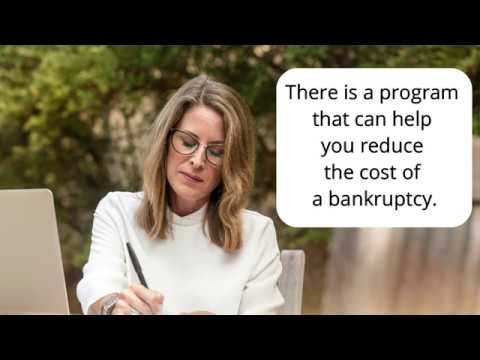
 The OSB’s Bankruptcy Assistance Program is a special program created by the Office of the Superintendent of Bankruptcy (OSB) for low-income bankruptcy help in Ontario for people who are unable to afford the normal costs of filing a bankruptcy.
Greater Toronto is an expensive place to live in. Sometimes it’s too expensive to even go bankrupt.
No, we’re not pulling your leg. With court costs, filing fees, and trustee services, it can cost between $1,500 and $2,500 to go bankrupt. The financial plight of some people can be so severe that it may seem on the face of things that they cannot afford to go bankrupt.
To address this situation, in 1993, the Federal Government created a special program, called the Bankruptcy Assistance Program. Under BAP, a person unable to afford the normal costs of filing a personal bankruptcy is able to secure the services of a trustee – the first necessary step in going bankrupt.
More on the process later. To be eligible for BAP, a person must not:
- Be in prison.
- Be involved in a commercial activity. Business filings can be complicated, costly, and time-consuming, so they are not included under BAP.
- Have what is called “surplus income.” This is the amount of money you earn that is over a pre-defined limit. What constitutes the limit is complicated and must be explained by a trustee such as Richard Killen & Associates.
If none of these things apply to you, how can you take advantage of BAP?
Well, you start by contacting the Office of the Superintendent of Bankruptcy (OSB). Tell them your problem and they will send you a list of participating Licensed Insolvency Trustees. Not every trustee participates in this voluntary program.
The idea is, that you are not eligible for the Bankruptcy Assistance Program until you have done your best to secure the services of a trustee the normal way. But the truth is, the program is often not needed. Bankruptcy trustees are used to dealing with people in financial straits. Many trustees, such as Richard Killen & Associates, are prepared to work with people and come to an arrangement that suits their circumstances and means.
In any event, under OSB, you visit a trustee on the list given to you. If, after the normal consultation (most trustees offer this for free), you cannot reach an arrangement to handle your bankruptcy, you ask the trustee to sign a paper and put down the reason why you couldn’t reach an arrangement.
Then you have to try the same thing with another trustee on the list. If again, you cannot reach an arrangement with that trustee and they sign the same paper as the first, you can go back to the government, and then, and only then, will they find you a third trustee under BAP. This third trustee is duty-bound to do your bankruptcy for “costs” – a term that means different things to different people but will vary in price from $400 to $800.
Many people misunderstand the BAP system. Explanations from the government often add to the confusion. A lot of people think that all they have to do is go to two Licensed Insolvency Trustees, get the form signed, and then go back to the government to get a free – or low-cost – bankruptcy. They don’t understand that they are supposed to try to make a deal with the first trustee. If they can’t, then they are supposed to try to make a deal with the second. If they still can’t, then the government will appoint a third.
Depending on who you see first, you may find that you don’t even need to see a second trustee, because the first trustee may accept your financial limitations and give you the same rate they would if the government had appointed them through BAP. We at Richard Killen & Associates do this all the time.
If you feel your financial circumstances are particularly dire and wonder whether you qualify for reduced fees in bankruptcy, come to Richard Killen & Associates for a free consultation. Lack of financial resources should not bar you from getting the help you need. We will make sure you understand all your options and will help you find a solution that best suits your circumstances.
Talk to a Licensed Insolvency Trustee for a free consultation if you feel your financial circumstances are particularly dire and you need low-income bankruptcy help, then the Bankruptcy Assistance Program from OSB may be a great fit for you.
Contact Richard Killen
FREE No Commitment Consultation
Contact us now for a fresh start!
“Serving Toronto & the GTA for over 25 years.”




Recent Blog Posts
- Why More Canadians Are Choosing Consumer Proposals for Debt Relief and Financial Recovery
- Consumer Proposal vs. Bankruptcy in Ontario: How Income and Assets Decide Your Best Route
- Are You Managing Debt or Just Surviving It? 10 Warning Signs It’s Time to Seek Debt Relief Solutions in the GTA
- Borrowing for Home Renovations in the GTA: Questions to Ask Before Taking on More Debt and How an LIT Can Help
- Back-to-School Expenses Are Adding Up: How to Prepare Without Going Into Debt Help Ontario