

A New Name – Licensed Insolvency Trustee
 The bankruptcy and proposal business is going to have a new player – at least it will appear that way. Since 1920 Trustees have had the title “Trustee in Bankruptcy”. Effective April 1st, 2016, Trustees are going to have a new name. We will be called “Licensed Insolvency Trustees”.
Actually this change has been coming for some time. Over the past 25 years the insolvency business has changed considerably. Trustees, who used to primarily handle bankruptcies and some business receiverships, have gradually morphed into people who do a lot more than that.
On the corporate side we have become the go-to people for effective restructuring when a company gets into certain kinds of trouble, but does not want to close their doors. This might mean re-organizing via a corporate proposal, or the use of the Company Creditors Arrangement Act, or even informal restructuring and deal-making. In other words as expansive a menu of solutions as the imagination and skills of a Trustee can supply to try to save the business.
On the personal or human side, Trustees have become the go-to people to provide the kind of knowledge an insolvent individual needs to achieve financial rehabilitation.
An insolvent person is by definition a person who can no longer keep all his creditors happy all the time – can’t keep all his debt payments up to date. This is usually disastrous for that person. A Trustee is uniquely placed to be able to provide that person with the tools to solve his problems. These might involve a bankruptcy solution or a consumer proposal in Toronto, or a more informal option. But the real solution will be that the insolvent person will have the chance to re-take control over their affairs. Though a lot of work will still have to be done, at least they can be in charge of doing it.
So the new title, which will be in use immediately, will be Licensed Insolvency Trustee.
Licensed – Because a Trustee must be licensed by the Federal Government, through the Office of The Superintendent of Bankruptcy, to have the authority to perform his duties.
Insolvency – Because the problems facing people today are not those of the past and the solutions and consequences have to be seen in a much more contemporary context. We are no longer necessarily talking about bankruptcy. There is much more to what we do.
Trustee – That stays because it properly reflects what we are – people who act in trust for others. Unlike a lawyer or other professional a Trustee does not work for only one side. A Trustee acts impartially in the interests of all the parties involved. This operates strongly to maintain public confidence in the legal insolvency process.
Hooray for the move forward!
Being Human: Debt relief is just a phone call away

When people come to Richard Killen & Associates for bankruptcy or debt counselling in Toronto, we don’t sit in judgment. It wouldn’t be fair anyway, because most people are their own harshest critics.
These people come to us at one of the worst times of their lives, when their worlds seem to be crashing around them. They feel afraid and guilty. The very act of opening the front door to our office can require an enormous act of will, to confront the bad news.
We sit down with them and listen to their story and ask the right questions. While each person’s situation is unique, and we have probably heard a similar story before, we can give them practical options to solve their problems; whether it is loan consolidation, credit counselling, creditor negotiation, a consumer proposal or even declaring bankruptcy in Toronto. We will let them know the pros and cons of every choice so they can decide what measure or measures suit them best. Their decision, not ours.
But, we will also try to make them understand that there is nothing they need to apologize for – unless it is being human. We humans all make mistakes. So if we are going to make mistakes, all we can do is try to make sure we don’t repeat them. In other words, make sure each mistake is a new one.
There are all kinds of reasons why people find themselves behind the eight ball financially: sickness, job loss, marital troubles, etc. But more often than not these problems have been made worse by their own mistakes, such as letting their spending get away from them and perhaps living beyond their means.
We try to help people see their situation in its proper perspective. We let them know that they are not the first to cope with this problem. Their crisis doesn’t make them bad people and it doesn’t define who they are. If they made mistakes they can also learn from them. In other words, turn a problem into an opportunity. We know this to be true. We’ve seen it happen many times.
Don’t get us wrong. We are Licensed Insolvency Trustees, not social workers or crisis counsellors. We serve a purpose defined and regulated by government and made accountable by law. But, one aspect of the legal process involves insolvency counselling, so we try to make sure that, at the very least, they can use their financial misfortune as a stepping stone to better control their financial future.
We have obligations to every person who walks through our door. Not just to help them find a solution to the problem in front of them, but to come out the other end in the best possible shape. The better they understand their situation with the proper perspective the better chance they have to achieve this goal.
So if you are living with the kind of financial problems we’ve described don’t be afraid to contact us. As we say in our TV ads, a phone call to us can be the most stress-relieving call you ever make. A debt relief program can put you back on the road to financial security sooner than you think.
5 Signs That You Have Too Much Debt And Need Debt Help
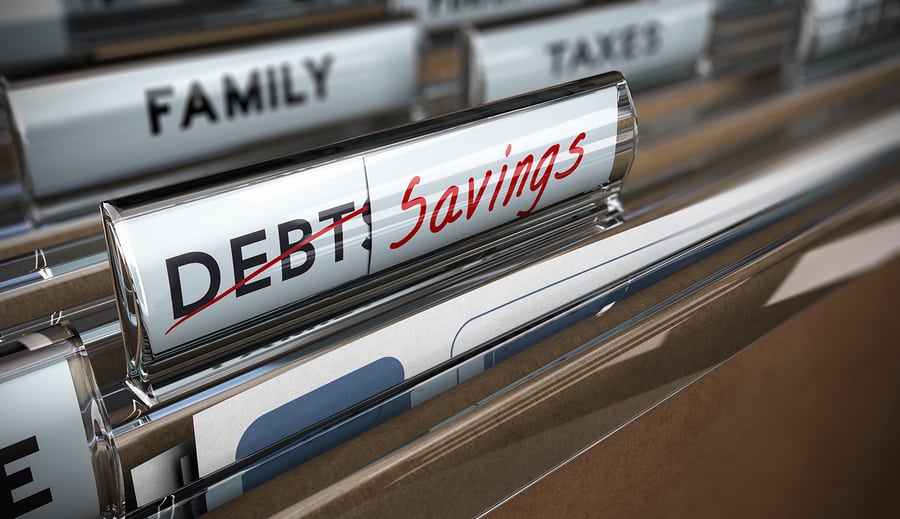 There are lots of different tells that you have that let debt levels get out of control and you should consider getting some debt help. Basically, if you are even asking yourself if this is the case, there’s a good chance you are in trouble and need some financial debt counselling.
But see if any of these warning signs resonate with you.
1. You have no money in your savings account
Having money in savings is about creating a nest egg for the future and putting aside funds for emergencies. A tapped-out account is a sign that you are living from paycheque to paycheque, with no cushion for life’s inevitable ups and downs.
2. You’re having trouble paying your bills
You are letting your bills accumulate, getting past their due dates. This will affect your credit rating. Paying only the minimum amount on credit card bills carries the balance to the next billing cycle and makes interest accumulate. If you have to pay your bills with loans from family, friends, credit cards, or cash advance outlets, you have too much debt. And eventually people will start saying no.
3. You’ve been told no for new credit
You’ve been playing the juggling game, applying for new credit to help pay for your debts or lifestyle. But you receive a letter of rejection, explaining that you have a poor credit score, too high a balance, too much credit or no credit history. At times it may seem like there is no end to the amount of credit you can get. But eventually the train does come to a screeching halt as creditors realize that you have become a bad risk.
4. You’re way too stressed
You’re losing sleep over your financial situation. Your work performance is suffering, as is your relationship with friends and family. You’re fearful, depressed and perhaps turning to alcohol or drugs for relief. Worrying about debt can take a terrible toll physically and mentally.
5. You don’t know how much you owe
Basically your head is buried in the ground. You don’t look at bills. You spend without checking your bank balances. You use your credit cards without thought. And you don’t know if you owe $1,000 or $10,000. You’re probably waiting for the axe to fall.
As we said, if you’re worried about debt, then debt is probably a problem. Problems also have solutions. Come to Richard Killen & Associates for a free consultation and get some debt help. We will help you to understand what your options are, so you can replace worry with hope, and debt with a clean balance sheet.
Five Reasons People Consider Declaring Bankruptcy
 While many people believe that declaring bankruptcy in Toronto is always a sign of financial mismanagement, this is not always the case. Misfortune and disaster can also lay low on someone who had been keeping their head above the financial waters. So here are five common reasons people become insolvent and may need a bankruptcy or a consumer proposal to solve their problem:
1. Losing their job
In an “iffy” economy, unexpected job loss is an increasingly common reason for people to get into financial trouble. Along with the serious blow to their self-esteem that accompanies being downsized, they could also be put in a precarious position with a sudden drop in income. If this is compounded by their spouse losing his/her job, or being laid low by illness disaster can really strike. Suddenly they find themselves coping with bills not covered by unemployment benefits or health insurance and begin the slippery slope of using credit to pay for everything.
2. Separation and Divorce
Not only does marital breakdown come with a high emotional toll, it can hit the pocketbook equally hard. Legal expenses can quickly mount up, especially in a contested divorce. And then living expenses are doubled as each ex-spouse sets up their own household. Everything can quickly get very expensive.
3. When Lighting Strikes
The nature of many disasters is that they come out of the blue. Your car suddenly breaks down and costs thousands to fix up. Your roof gets irreparably damaged and your insurance doesn’t cover it. No matter what the disaster is, it has to be met and savings can dry up almost overnight.
4. Retiring With Debt
In an era where fewer people have adequate pensions, more and more people are retiring with serious debt loads, and reduced income to meet the payments and little prospect of increasing that income. Or, they may go into debt helping out their children or grandchildren who find themselves in financial straits. Statistics show that the number of seniors claiming bankruptcy is greatly on the rise.
5. Financial Mismanagement
OK, this one has to be said. This may come as a shock, but people are human. With the modern reality of easy access to credit, anything from a shopping spree to a vacation, to a house purchase can be a mistake, although it doesn’t appear to be at the time. So people take the risk and later live to regret it.
These five are among the most common reasons for declaring bankruptcy. Every one of us makes mistakes daily. This does not define us. What we do about them is what defines us.
So misspending can get people into trouble. But this is a human mistake that many of us make. They just need to learn to forgive themselves, take the necessary steps to address the situation, and then get on with their life.
However, the last paragraph is easier said than done for most people. We can help by showing what the options are for dealing with debt crises in Canada.
If you are considering declaring bankruptcy in Toronto call Richard Killen & Associates for a free assessment and a chance for a new start.
Debt Consultant- Canadian Debt Alert!
 Many more Canadians are tying rocks around their waists and jumping into a sea of debt. If this sounds familiar, it may be time for some financial debt counselling in Toronto.
According to a report recently released by Statistics Canada, “Changes in debt and assets of Canadian families, 1999 to 2012,” more than a third, of families had a debt-to-income ratio above 2.0 in 2012. In other words, their level of debt was at least twice that of their annual after-tax income. In 1999, that share was 23%.
Such high levels of debt leave many families at the mercy of shifting economic tides, which may include sudden loss of employment, illness, or the skyrocketing cost of borrowing.
According to the Globe and Mail, “The Statscan paper comes as Canada’s debt-to-income ratio has risen further, hitting a record 163.3% in the fourth quarter of last year. The central bank has long cited household debt as a key risk to the economy, though it cut interest rates in January to counter another threat: lower oil prices.”
This Statscan paper looks at changes in debt, assets, and net worth among Canadian families with debt from 1999 to 2012, using selected family characteristics. It also examines the extent to which two key ratios of indebtedness, the debt-to-income ratio, and the debt-to-asset ratio, varied over the period.
Among the paper’s highlights:
- In 2012, the percentage of Canadian families with debt was 71%, up from 67% in 1999. The median debt held by these families was $60,100, up from $36,700 in 1999 (in 2012 constant dollars).
- Between 1999 and 2012, median debt and median assets increased for most types of families, but not equally for all categories of families. Median debt, for instance, increased faster among those in the 35-to-44 age group, among couples with children under 18, and among mortgagees.
- Between 1999 and 2012, the median debt-to-income ratio rose from 0.78 to 1.10, while the median debt-to-asset ratio remained stable, at around 0.25. Families in the 35-to-44 age group witnessed significant increases in both their debt-to-income and debt-to-asset ratios.
- In 2012, 35% of Canadian families had a debt-to-income ratio above 2.0—meaning that their debt was at least twice the level of their annual after-tax income. This compared with 23% of Canadian families in 1999.
- In 2012, 14% of families had consumer debt (i.e., debt other than mortgage debt) that was larger than their annual after-tax family income. In comparison, 8% were facing the same situation in 1999.
If you find yourself in a sink-or-swim position with your family debt load, come to Richard Killen & Associates’ debt consultants for free debt counselling in Canada. A debt advisor will outline your options and their consequences, so you can start swimming in the right direction.
Are You in Debt Denial?
 Are we just fooling ourselves.? Sure you’re carrying a balance month to month on your credit card, have car payment and a substantial mortgage on your house. But this is normal, right?
No, not necessarily. There’s a good chance you’re fooling yourself. While carrying a balance on your credit card may be par for the course these days, consumer credit rate site RateSupermarket did a poll of 6,000 Canadians and discovered that “27.5% of respondents [were] wrong in how they perceive their debt, with 22% mistakenly believing they owe less than the national average.”
According to RateSupermarket editor Penelope Graham, “Canadians want to believe their credit habits are sustainable and responsible. However, 42% of those who believe their debt is on par with the average are actually carrying more than the norm.”
The flip side of this is that 35.4% of people polled believed they had too much debt when it was actually lower than their peers.
An infographic put together by RateSupermarket points out that the average credit card debt in Canada is $2,627 and that 46% of people who believe they have normal credit card debt have balances exceeding $8,000.
Apparently it’t time for many of us to take a reality check. To overcome debt denial, it’s time to look at your real numbers in black and white. Check your credit card statements, loan papers and bills in arrears and put down on paper how much you owe whom.
You’ll be surprised. Many of us underestimate the size of our debt. Then prioritize your debts by size and urgency and start paying them off.
If you find that the size of your debt has become overwhelming, you may need some sound advice. Come in to a free first meeting at Richard Killen & Associates. We will assess your situation and give you your options.
You’ll know exactly where you stand and what you can do about it. There will be no need to fool yourself.
10 Debt Danger Signals

After the expense of the holidays, many of us wonder how much debt is too much. Yes, Canadians are used to carrying record debt loads, but there comes a point where the burden may become too heavy.
Here are 10 danger signs that could reveal your spending is out of control:
1. You are making only minimal payments on your credit card balances as you head towards maxing them out.
2. Even so, you continue to use them for everyday purchases, such as groceries or gas.
3. You are using one credit card to pay off another. The fact that you have more than one or two credit cards is in itself a danger signal.
4. You borrow money to make it from one payday to the next.
5. You miss payments and due dates for bills and loans.
6. Creditors are after you for payment, threaten to sue or repossess your car, furniture or television, or hire a collection agency to recover the money for them.
7. You argue a lot with family about money, or hide your spending habits from them.
8. The size of your debt grows month after month. Or it has grown so large that you are afraid to look at the real total.
9. Extra money earned through overtime, tips or bonuses is relied on as part of your regular monthly income.
10. Thoughts about money and debt crowd out all others and put your life under a cloud.
Although your situation may be dire, it is never hopeless.
If you feel your debt load is becoming too much, come into Richard Killen & Associates for a free assessment. As a federally licensed bankruptcy trustee in Toronto, we can take you through all the possible financial coping strategies – whether it is debt consolidation, negotiating with creditors, a consumer proposal or even a personal bankruptcy – and find out what works best for your particular situation. And you make all the decisions.
After all, we’re talking about your peace of mind, right?
Divorce and Bankruptcy

Divorce in Canada can be complicated when it comes to debt. Divorce can cause bankruptcy and bankruptcy can cause divorce. Study after study show that financial problems can lead to marital breakdown.
Filing for bankruptcy as you go through a divorce, or after, can make both processes more difficult and stressful.
Not off the Hook
If you are separated or divorced and have joint debt, you’re not let off the hook. Both of you are still liable for the money owed. If one of you files for bankruptcy, the creditors can go to the other ex-spouse and try to collect.
If you are in the process of going through a separation, one way of dealing with this is to have both of you take out new loans to pay off your old debt, so each of you know what you owe and aren’t affected by how your ex-spouse deals with the problem.
Of course, if you can’t get the loan and the two of you are overwhelmed by the debt, then you both may be forced to file for bankruptcy or a consumer proposal.
And Even if You Agree . . .
Your ex might play nice and stipulate in the separation agreement that he/she will be responsible for the joint debt. Problem solved? Not necessarily.
This agreement is not binding on the creditor who gave the money in the first place. Unless the creditor actually signs the agreement, too, the court can’t give you a pass on debt that was jointly signed.
So to get such an agreement written into your separation requires the cooperation of your ex and creditor, as well as help from a lawyer.
Courts Like to Play Nice With Each Other
Family and bankruptcy courts tend to respect each other’s decisions and one won’t usually overrule the other. So if a family court order decrees that you sign over your share of the matrimonial home to your ex, the equity transfer isn’t likely to be attacked in bankruptcy court.
Conversely, if you file for bankruptcy, then your non-exempt assets, such as your equity in the house, are vested with the trustee. It is generally taken off the table and not considered in a divorce.
Trust Your Trustee
If you are dealing with joint debts and only one of you is declaring bankruptcy, it’s best to let the trustee know which ones are held in common. If you aren’t sure, get a copy of your credit report or check with each of your creditors. If you situation is complicated, the trustee may also refer you to a lawyer to help you sort out the legal aspects.
The point is, when divorce and bankruptcy come together, there are a lot of thorny issues you must address. Come in for a free consultation at Richard Killen & Associates, and we’ll set you on the path to emotional and financial healing.
Gas Goes Down, Debt Goes Up
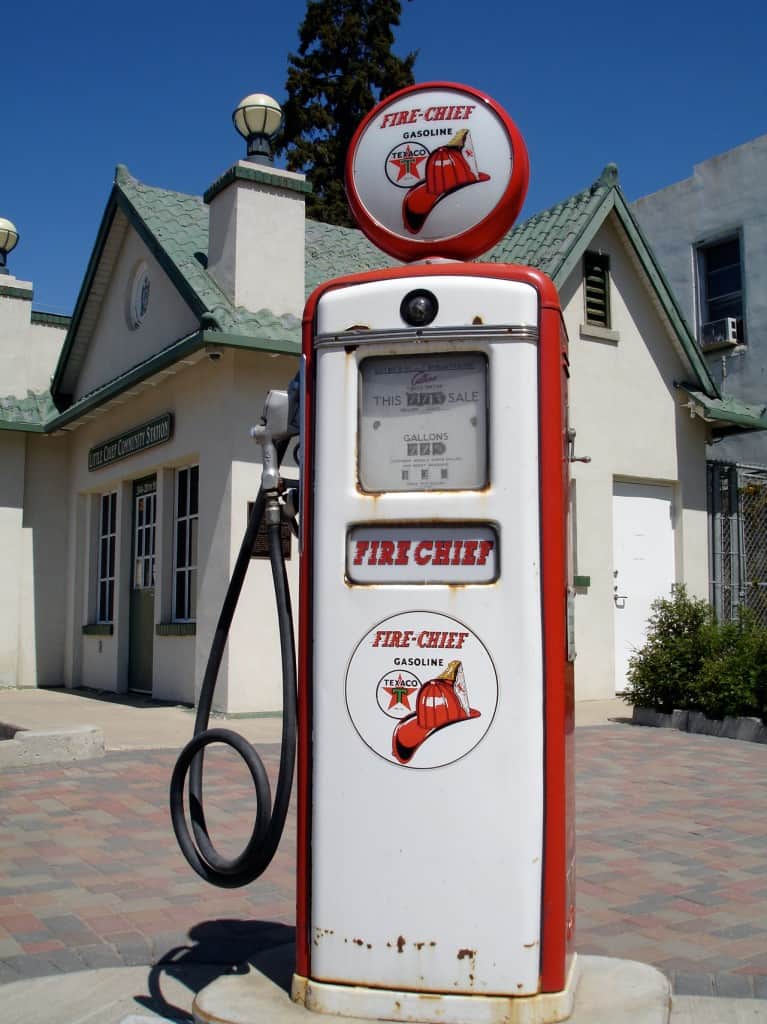
Apparently you can’t win. Gas prices go down, saving consumers money, but then the commodity-based Canadian economy is hurt by the shortfall in oil revenues, shown in the dropping loonie. You’ll have more money to spend on you next trip to Buffalo but it won’t go as far as before.
While less costly fill-ups are leaving us with more cash, it’s not staying in our pockets as Canadians take on unprecedented levels of debt.
According to a Financial Post article, the loss of oil revenues will hurt the housing market, which already saddled with “near-record levels of household leverage. . . . Canada’s ratio of household debt to disposable income rose to a record 162.6% between July and September, according to data released last month. Benchmark interest rates of 1% have fanned a house-buying frenzy that sent 2014 sales up 6.7% in Toronto and 16% in Vancouver.”
Then a Globe and Mail article points out: “Oil prices may be crashing and sparking fears of an economic downturn, but Canadian households continue to have few qualms about piling on debt. . . . Household credit grew by an annualized rate of 4.5% in November, a two-year high and the second month of strong gains, to top $1.8-trillion.”
Residential mortgage debt had the biggest jump, leaping 5.2% in November from the same month a year before. Other forms of credit, including credit cards, lines of credit and loans, grew by 3%.
Canadians have been able to service their high debt levels because of relatively low interest rates. But if the country’s unstable economic conditions lead to a spike in interest rates, then the load might become unbearable for many, leading to bankruptcies and other credit problems.
If you have any doubts about your own situation call Richard Killen & Associates and we’ll set up a free consultation to assess everything and review all your options. It is usually a good idea to get ahead of any potential problems that may lie just over the horizon.
Will Bankruptcies Increase as Economy Improves?
 As the outlook gets rosier for the Canadian economy, those in deep dept may pay the price with bankruptcy.
With the U.S. economy expected to undergo a widespread recovery next year, Canada will likely fall suit, with rising interest rates as well. Normally this would be good news. However, Canadians are going into the biggest shopping season of the year staggering under the load of a record $1.51 trillion in debt.
Our debt levels significantly outstrip those of American consumers. Excluding mortgages, our average debt has increased 2.7 per cent to $20,891, a recent article in the Globe and Mail points out.
On the tipping point
Lulled by five years of rock-bottom interest rates, we have taken on mountains of debt. While an improvement in the economy would normally be accompanied by a fall in the number of bankruptcies, our financial situations are so precarious that a small rise in interest rates could have disastrous consequences.
“We might see bankruptcies rising alongside interest rates,” affirms CIBC economist Benjamin Tal in a Huffington Post article.
Holiday hangover
With a frenzied beginning to the holiday buying season – seen in the Canadian embrace of America’s Black Friday madness – all indications are that household debt will go even higher, as December’s credit card bills become due in January.
Homes and cars
Many Canadians have been lured into the housing market with low interest rates, even though house prices have soared in key markets. In Vancouver, for example, the average price of a single-family detached home is now close to, gulp!, $1 million.
Overall there has been a marked increase in mortgage debt that puts many at risk if we see an increase in interest rates.
Auto loans and installment loans have been responsible most of the debt increases, up 6.8 per cent and 5.8 per cent respectively, Equifax Canada points out. Installment loans are loans with fixed monthly payments, which can include loans us for cars, furniture or home renovations.
Not all bad news
While our debt levels have come up, delinquencies and bankruptcies have actually gone down in recent quarters. Perhaps people are more determined to live within their means, or they have become aware of how precarious their situation is.
If after the turkey leftovers are gone, and the bill statement begin to fill your mailbox and email inbox, you feel that your debt situation is getting out of hand, call us at Richard Killen & Associates.
As one of Toronto’s friendliest and most respected Licensed Insolvency Trustees, we’ll sit down with you for a free assessment. We will lay out your options, whether it is taking an amalgamation loan, negotiating with creditors, offering a consumer proposal or going into bankruptcy and starting again with a clean slate.
Let it be a very Happy New Year for everyone.
Contact Richard Killen
FREE No Commitment Consultation
Contact us now for a fresh start!
“Serving Toronto & the GTA for over 25 years.”


Recent Blog Posts
- Why More Canadians Are Choosing Consumer Proposals for Debt Relief and Financial Recovery
- Consumer Proposal vs. Bankruptcy in Ontario: How Income and Assets Decide Your Best Route
- Are You Managing Debt or Just Surviving It? 10 Warning Signs It’s Time to Seek Debt Relief Solutions in the GTA
- Borrowing for Home Renovations in the GTA: Questions to Ask Before Taking on More Debt and How an LIT Can Help
- Back-to-School Expenses Are Adding Up: How to Prepare Without Going Into Debt Help Ontario