


How to Lower Your Heating Costs

As the cold weather descends, Canadians are faced with their annual challenge of how to stay warm without breaking the bank – especially as the cost to heat homes rises. To lessen the damage to household budgets caused by high fuel costs, here are five common-sense steps you can take:
1. Turn Down the Heat
By setting your thermostat to 20 degrees, you may be able to reduce your heating bill by 5 to 10%. If it seems chilly, wear a sweater and warm socks. And keep in mind that while you were sweltering in 30-plus degree temperature in the summer, you would have killed for 20 degrees. And reduce your heat another four or five degrees when you are out of your house or gone to bed (saving another 15% in heating costs). Studies show people sleep better in cool rooms.
2. Heat Only What You Use
Shut the doors and close the vents of the rooms you’re not using, so you only heat the rooms you’re living in. On the other hand, do heat the basement, even if you don’t descend to its depths often. A cold basement will make the first floor of your house feel cold.
3. Get Rid of Cold Drafts
Cold drafts are uncomfortable and a reminder that as cold air seeps into your house, hot air is leaking out. Feel for the drafts around window and door frames, and install weather stripping where needed. You might also consider covering some windows with plastic, to keep heat in, and at very least covering the windows with blinds or curtains at night.
4. Control Your Fireplace
Yes, it’s great to have a wood-burning fireplace, providing heat and cheer. But when the fire isn’t burning, the hot air is sucked up the chimney. So close the flue.
5. Ensure That Your Furnace Works Efficiently
You should get your furnace inspected and tuned every one to two years, so that it runs safely and efficiently. In between servicing, making sure that the filter is clean. And if your furnace is old and inefficient, think about replacing it with a new, energy-efficient model, the short-term cost will be recouped after a few cold Canadian winters.
Staying warm is an annual Canadian challenge that we have become very adept at meeting. But, there are other challenges that we must face from time to time such as when we find our debts outrunning our income and our ability to pay them. This too can strain our household budgets and eventually affects large parts of our lives. Well, there are different ways of meeting that challenge and one of the best is to call Richard Killen & Associates and take advantage of the free consultation offered. It is a sure-fire way of staying warm during that kind of “weather” crisis.
Scared to Death of Taxes
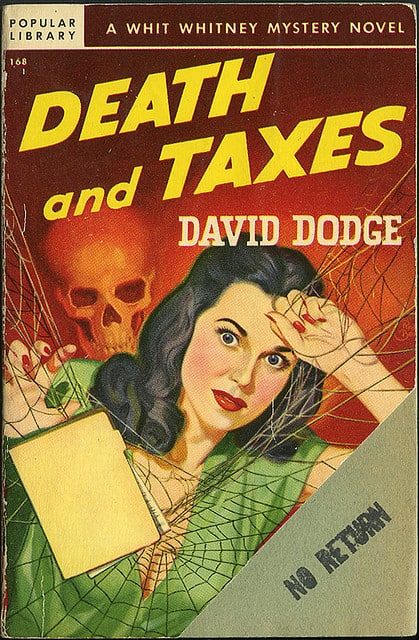 Death and taxes are inevitable. For some they are the same thing.
Fear of the tax man may be justified. As a creditor he has super collection powers that ensure that most people don’t have a smile on their face when they receive a notice from the Canadian Revenue Agency (CRA).
Among the things the agency can do are charge penalties and interest on all overdue accounts, withhold child tax credits and GST credits, and garnishee your bank account and pay. Without your consent, it can register a lien against your home. And it can take actions without going through a court process, as other creditors are forced to do.
But the news is not all bleak. Some people labour under the misconception that tax debts are not included under a personal bankruptcy. They in fact are, so when you receive your bankruptcy discharge, back taxes are usually included.
This is, if you owe the government less than $200,000 in back taxes. If you owe more in personal income tax debt, representing 75% or more of your total unsecured debts, then you must appear in bankruptcy court to decide if any conditions should apply to your discharge.
If you are undergoing a bankruptcy, then some special handling of your income taxes is required. The trustee will prepare two tax for you during the course of a year. A pre-bankruptcy income tax return must be filed from January 1 to the date of bankruptcy. Then a post-bankruptcy return must be filed from this date to the end of December.
If there are any funds in a return from the post-bankruptcy filing, then they are paid to creditors. Any taxes owed prior to the bankruptcy are discharged. And if there is an amount owing the government on the post-bankruptcy tax return, then it is up to you pay it.
Negotiating the ins and outs of taxes and bankruptcy can be a tricky and delicate process. Consult an expert at Richard Killen & Associates so you can discover your options and keep the tax man off your back.
Contact Richard Killen
FREE No Commitment Consultation
Contact us now for a fresh start!
“Serving Toronto & the GTA for over 25 years.”


Recent Blog Posts
- Debt Settlement vs. Licensed Insolvency Trustees: Understanding the Costs and Risks
- What Happens If a Collection Agency Is Calling You in Ontario? What They Can & Cannot Do—and How to Stop the Calls
- Can I Keep My Car During a Consumer Proposal or Bankruptcy in Ontario? An LIT Explains
- Will a Consumer Proposal Hurt My Mortgage Renewal in Ontario?
- Why More Canadians Are Choosing Consumer Proposals for Debt Relief and Financial Recovery