

The Role of a Licensed Insolvency Trustee in Mississauga
The role of a Licensed Insolvency Trustee in bankruptcy Mississauga is critical in helping consumers who choose to go through the process of filing for bankruptcy to solve their overwhelming debt problems. Not only do they play a very big part in helping to minimize confusion, but they are present from beginning to end to make sure that every step of the process gets done as quickly and efficiently as possible.

Licensed Insolvency Trustees (LITs) are the only professionals licensed by the Federal Government of Canada to provide debtor information and advice to individuals and businesses with debt problems to help them make informed choices to deal with their financial difficulties. In addition, they are the only ones permitted by law to provide and perform debt restructuring services under the Bankruptcy & insolvency Act (BIA).
Licensed Insolvency Trustees in bankruptcy Mississauga were previously called bankruptcy trustees, or trustees in bankruptcy. The Office of the Superintendent of Bankruptcy Canada has recently changed their designation from bankruptcy trustee to Licensed Insolvency Trustee (LIT) in order to clearly differentiate them from debt consultants who are not licensed by the federal government to provide debt services.
The new designation is important to help eliminate any confusion or doubt among consumers about the legitimacy of LIT’s to provide government programs to eliminate debt. When dealing with a Licensed Insolvency Trustee, consumers are protected in three ways:
The Canadian government regulates the insolvency profession and ensures that Trustees are efficient and effective in complying with the insolvency process.
The Code of Ethics for Trustees establishes a standard for services that they are required to provide to a business or individual who has filed for bankruptcy.
The laws regulating the insolvency process makes sure that both the debtor’s rights and the creditor’s rights are respected.
In Mississauga, a Licensed Insolvency Trustee can provide a wide range of debt management solutions, including consumer proposals, loan consolidations, and bankruptcies. Insolvency Trustees are the most highly trained and educated debt experts that you can talk to. In most cases, trustees have obtained a university degree and most of them hold an accounting designation. For licensing, all trustees are required to complete a three-year bankruptcy and law course, pass a comprehensive oral examination, and undergo background investigation by the federal and national police force of Canada (the Royal Canadian Mounted Police). Only trustees who are licensed by the Office of the Superintendent of Bankruptcy Canada (OSB) can hold the designation of Licensed Insolvency Trustees.
Their role as debt professionals include the following:
- Provide free initial consultation to review your financial situation
- Explain to you in detail all your debt relief options, not just bankruptcy
- Recommend the best debt management solution that is best to your situation, which may or may not include any type of insolvency solution provided by the Bankruptcy & Insolvency Act
- Administer consumer proposals and bankruptcies and manage assets held in trust
- Gather all vital information to file the necessary documents and start insolvency proceedings
- Notify your creditors, accept and review all claims and administer the rules of the process
- Apply for your discharge or completion certificate once you’ve completed all your duties
- Ensure that everyone complies with their duties and responsibilities under the law.
If you are deep in debt and are getting harassed by non-stop collection calls and wage garnishments, consulting with a trustee is the most risk-free and inexpensive option you can take towards the right direction. A Licensed Insolvency Trustee in Mississauga can help you determine which debt relief option is best for you and your family so you can be on the road towards a debt free life.
Christmas Credit Hangover

In this video, Richard Killen, Licensed Insolvency Trustee in bankruptcy in Toronto talks about buying Christmas gifts on credit cards.
It is important to remember that credit card bills don’t take a Christmas holiday. Christmas brings out the “giving” in us, especially when we have children or grandchildren. There is nothing wrong with giving, but remember, the piper will always have to be paid.
Licensed Insolvency Trustees tend to be very busy in January when the credit card bills come in. Don’t let yourself fall into that trap.
Should you find yourself in debt and your monthly bills exceed your monthly income, maybe it is time to have a conversation with Richard or one of the other trustees in bankruptcy. Call us at (416) 285-9511
5 Keys to Securing your Financial Freedom
 Financial freedom – that’s what everyone aims to attain at some point in life. We all dream of “getting there” financially, to live the rest of our life without financial fear or worry, a life where we don’t merely work to pay the bills and not have enough left over, but actually want our hard work to pay off in the sense that we can meet all our debts, have enough in savings or investments to secure us during our golden years and then still have some more available to spend, to take pleasure in and enjoy life with.
Is financial freedom a reachable dream? It is quite reachable, but it takes some specific goal setting and realistic financial planning.
These key points, adapted from Robert Kiyosaki’s Rich Dad Poor Dad, can help you align your money goals in the direction where you are able to secure your financial future easily.
Budgeting is basic
A budget can provide a solid structure for all of your financial activities. It will help you monitor income and expenses for a specific period, so you can see how much money is coming in, how much is available to use, where you’re overspending and where you can make cutbacks. It gives you a concrete plan to prioritize where your money should go and to live within its limitations.
Manage spending
About one in five Canadians acknowledge that it’s their bad spending habits that have brought about their financial hardships. You can make enough money, even more than enough money, and you can have the most sophisticated budget in the world, but if you don’t break off little every day spending habits that allow money to leak out of your wallet, you’ll never be able to straighten out your financial situation.
If you get in the habit of tracking your expenses and consistently keep to your budget, you will learn to recognize these bad spending patterns. To undo them, start forming new habits that can help you manage your money properly — try looking for ways to increase your income, educate yourself to manage your expenses carefully, start a plan to pay off your debts and learn saving habits.
Learn to save
If spending money is very easy for you to do, then you’ll have to reverse that and make saving money second nature to you instead. Saving habits won’t form overnight, so be patient and stay committed. A good budget will incorporate a savings plan — save for an emergency fund, save for retirement, save for college tuition, etc. One of the best ways to save money is to put it away in a separate account so that, one, it’s out of your reach and you can’t spend it easily, and two, you can see how your money is growing. Once the amount reaches a certain level you’re comfortable with, learn ways to invest it so that it can keep growing.
Get rid of debt
Planning for your financial future includes examining your debt status. If you have a debt problem, bring it under control right away. Ignoring it will only compound the debt – and the stress you’ll be feeling. Don’t hesitate to get financial debt counselling assistance from accredited credit counselors who can work with your creditors and make arrangements to pay smaller monthly payments. You may feel overwhelmed and helpless, but you’ll find that you actually have many options available to help control the bleeding, including filing for a consumer proposal or declaring bankruptcy. Set up a meeting with an accredited trustee to discuss your financial circumstances and find out what debt relief option is the right choice for you.
Debt can deprive you not only of financial security, but of your dreams, hopes and goals in life, so make it a life goal to live debt free.
Gain financial knowledge
As Benjamin Franklin says, “An investment in knowledge pays the best interest.” You don’t necessarily have to be academically educated on finance, just do the necessary research and planning to help you make well-informed money and investment decisions and to keep you up to date on current financial matters.
These five key steps will guide you to set a realistic financial plan that’s devoid of guesswork, misinformation and wishful thinking. Once you have a solid financial plan to measure by you can become singularly focused on how you can make your money work for you so you won’t have the pressures of making a living hanging over your head and you can finally be financially free to do what you really want in life.
5 Signs That You Have Too Much Debt And Need Debt Help
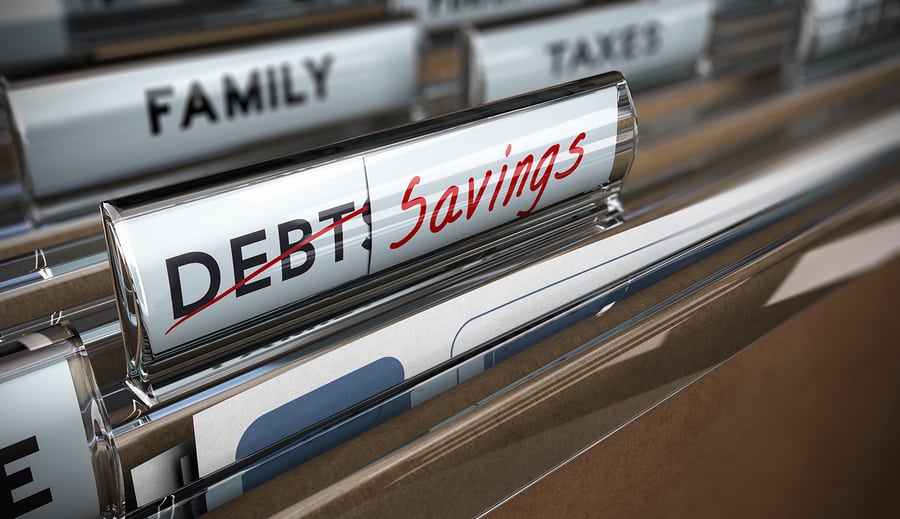 There are lots of different tells that you have that let debt levels get out of control and you should consider getting some debt help. Basically, if you are even asking yourself if this is the case, there’s a good chance you are in trouble and need some financial debt counselling.
But see if any of these warning signs resonate with you.
1. You have no money in your savings account
Having money in savings is about creating a nest egg for the future and putting aside funds for emergencies. A tapped-out account is a sign that you are living from paycheque to paycheque, with no cushion for life’s inevitable ups and downs.
2. You’re having trouble paying your bills
You are letting your bills accumulate, getting past their due dates. This will affect your credit rating. Paying only the minimum amount on credit card bills carries the balance to the next billing cycle and makes interest accumulate. If you have to pay your bills with loans from family, friends, credit cards, or cash advance outlets, you have too much debt. And eventually people will start saying no.
3. You’ve been told no for new credit
You’ve been playing the juggling game, applying for new credit to help pay for your debts or lifestyle. But you receive a letter of rejection, explaining that you have a poor credit score, too high a balance, too much credit or no credit history. At times it may seem like there is no end to the amount of credit you can get. But eventually the train does come to a screeching halt as creditors realize that you have become a bad risk.
4. You’re way too stressed
You’re losing sleep over your financial situation. Your work performance is suffering, as is your relationship with friends and family. You’re fearful, depressed and perhaps turning to alcohol or drugs for relief. Worrying about debt can take a terrible toll physically and mentally.
5. You don’t know how much you owe
Basically your head is buried in the ground. You don’t look at bills. You spend without checking your bank balances. You use your credit cards without thought. And you don’t know if you owe $1,000 or $10,000. You’re probably waiting for the axe to fall.
As we said, if you’re worried about debt, then debt is probably a problem. Problems also have solutions. Come to Richard Killen & Associates for a free consultation and get some debt help. We will help you to understand what your options are, so you can replace worry with hope, and debt with a clean balance sheet.
4 Things About Financial Planning In Toronto That Are Untrue
 People come up with a lot of reasons to avoid financial debt counselling in Toronto and not to plan for their financial future. They’re too young, too old, too broke and so on. But the truth is, financial planning, and the services of financial planner, can help you make a game plan so you can get where you want to go, whether it’s retirement with an adequate income or making a major purchase, such as a house or a car.
So here are four myths about financial planning debunked
Myth 1. Financial planning is only for the rich
Many people believe that only the affluent need the services of a financial planner. Not so. If your savings are small and you’re not really keeping track of where your money is going, all the more reason to get a plan in place. A financial planner can help you set a budget and let you know what tax breaks you can get through financial products such as RRSPs. And while there are financial planners who specialize in wealthy clients, many others provide reasonably priced services to people of modest means.
Myth 2. A financial planner will only give investment advice
Choosing the right investments is only part of the bigger financial picture. A good planner or adviser will take into account varied aspects that include taxes, insurance, retirement planning, creating a budget, estate planning, liquidity requirements and other life goals. And if you have conflicting financial goals, they will help you to understand each one’s pros and cons so you can prioritize.
Myth 3: You’re too young to start planning
Yes, you may not have much money, or even a career, at this stage, and feel that financial planning is something you can do down the endless road that stretches out before you. But starting to plan now will allow you to develop good habits that will serve you well as your career takes off. Small investments made now can take advantage of compound interest rates over many years to grow into something substantial.
Myth 4: All financial planners are created equal.
Not true. Some are well qualified and will work in your best interest; others not so much. So get referrals from friends and family who have used the services of a financial planner before. But also check that the planner has good professional qualifications. For example, do they have the Certified Financial Planner (CFP) designation? If you are going to talk to a planner about using their services, the Financial Planning Standards Council (FPSC) suggests you ask these 10 questions.
Are You in Debt Denial?
 Are we just fooling ourselves.? Sure you’re carrying a balance month to month on your credit card, have car payment and a substantial mortgage on your house. But this is normal, right?
No, not necessarily. There’s a good chance you’re fooling yourself. While carrying a balance on your credit card may be par for the course these days, consumer credit rate site RateSupermarket did a poll of 6,000 Canadians and discovered that “27.5% of respondents [were] wrong in how they perceive their debt, with 22% mistakenly believing they owe less than the national average.”
According to RateSupermarket editor Penelope Graham, “Canadians want to believe their credit habits are sustainable and responsible. However, 42% of those who believe their debt is on par with the average are actually carrying more than the norm.”
The flip side of this is that 35.4% of people polled believed they had too much debt when it was actually lower than their peers.
An infographic put together by RateSupermarket points out that the average credit card debt in Canada is $2,627 and that 46% of people who believe they have normal credit card debt have balances exceeding $8,000.
Apparently it’t time for many of us to take a reality check. To overcome debt denial, it’s time to look at your real numbers in black and white. Check your credit card statements, loan papers and bills in arrears and put down on paper how much you owe whom.
You’ll be surprised. Many of us underestimate the size of our debt. Then prioritize your debts by size and urgency and start paying them off.
If you find that the size of your debt has become overwhelming, you may need some sound advice. Come in to a free first meeting at Richard Killen & Associates. We will assess your situation and give you your options.
You’ll know exactly where you stand and what you can do about it. There will be no need to fool yourself.
10 Debt Danger Signals

After the expense of the holidays, many of us wonder how much debt is too much. Yes, Canadians are used to carrying record debt loads, but there comes a point where the burden may become too heavy.
Here are 10 danger signs that could reveal your spending is out of control:
1. You are making only minimal payments on your credit card balances as you head towards maxing them out.
2. Even so, you continue to use them for everyday purchases, such as groceries or gas.
3. You are using one credit card to pay off another. The fact that you have more than one or two credit cards is in itself a danger signal.
4. You borrow money to make it from one payday to the next.
5. You miss payments and due dates for bills and loans.
6. Creditors are after you for payment, threaten to sue or repossess your car, furniture or television, or hire a collection agency to recover the money for them.
7. You argue a lot with family about money, or hide your spending habits from them.
8. The size of your debt grows month after month. Or it has grown so large that you are afraid to look at the real total.
9. Extra money earned through overtime, tips or bonuses is relied on as part of your regular monthly income.
10. Thoughts about money and debt crowd out all others and put your life under a cloud.
Although your situation may be dire, it is never hopeless.
If you feel your debt load is becoming too much, come into Richard Killen & Associates for a free assessment. As a federally licensed bankruptcy trustee in Toronto, we can take you through all the possible financial coping strategies – whether it is debt consolidation, negotiating with creditors, a consumer proposal or even a personal bankruptcy – and find out what works best for your particular situation. And you make all the decisions.
After all, we’re talking about your peace of mind, right?
Financial Resolutions for the New Year
 The new year is a time of new beginnings. Many of us make resolutions to live more healthily, fix up our relationships and get our finances in order.
While we can’t help you lose weight or improve your love life, we’d be happy to offer you eight suggestions so that you can get a better handle on your financial affairs.
1. Make a Budget
While this may seem obvious, you would be surprised by how many people navigate the tricky waters of personal finance without a compass or map. So it’s simple: Set a budget and then stick to it – or at least try like the Dickens.
It will obviously take willpower to live within your means, but you can make it easier on yourself if you set a realistic budget. Don’t just pull numbers out of the air. Look at your income, examine your expenses – perhaps pulling together a worksheet of your bank and credit card expenses for three months – and then set a budget accordingly. Think of giving yourself a fixed weekly or monthly allowance for discretionary expenses, such as shopping, eating out and entertainment.
2. Save Automatically
Set up an automated savings and bill payment program through your financial institution. Each month, on a certain date, you’ll have an amount transferred automatically for retirement savings, a future down-payment on a home, savings for a rainy day, utility payments and so on. Because the funds are drawn straight from your account, you are more likely to stick to the payment regimen.
Yes, we know some people don’t seem to have any extra money available for “savings.” But even if it is only $1 a week, it can be the thin edge of the wedge – to be increased later to $2 or $5 or even $10 or more. You have to start somewhere, so try to make this a part of your budget.
Another great way to save automatically is through a payroll deduction. Talk to your employer about this.
3. Prioritize Your Debts
Not all debts are created equal. Make a list of your debts. Pay off the ones with the highest interest rates (most likely your credit cards) first. There’s no point in investing money if you are continually carrying credit balances at high interest rates. If you have savings bonds or cash holdings, you should use these to pay off debt. You can also see if you are able to refinance your debts or negotiate lower rates.
4. Close Accounts You Don’t Need
Banks and financial institutions charge for everything you can imagine. So do you need several chequing and credit card accounts? The answer is usually no. Bite the bullet and simplify your life at the same time.
5. Have the Talk
Canadians hate talking about money matters. It’s a fraught subject that has sunk marriages and destroyed relationships. But hiding your head in the sand doesn’t help. The behaviours that lead to debt and financial problems won’t change unless they are brought into the open and discussed in a constructive manner. Try the pronoun “we” or “our” instead of “me” or “you.” The discussion with your partner or other family members will usually be more productive.
Parents should also have financial discussions with their children, especially if the kids are poised to leave for university or begin their working lives.
6. Build an Emergency Fund
Things happen that can impede your ability to earn. You may lose a job or become incapacitated by illness. So, of course, check your insurance to make sure that you have adequate life, disability, home and auto insurance. But you should also build up an emergency fund, with three to six months worth of living expenses . . . just in case.
7. Leverage the Investment in Yourself
If you need more money, why not convert your untapped expertise or interests to create another revenue stream? Perhaps you can do freelance work or act as a professional coach. Or if you have have collected a lot of stuff over time, sell it on eBay or through Kijii. If you have the chance to take courses or seminars to upgrade your working qualifications, do so and you may be able to command a higher salary. Sometimes your employer can help you fund such upgrades.
8. Keep a Record of Your Small, Out-of-Pocket Expenses
One of the unseen things that tends to hold us back in achieving budgetary goals is the money we spend without thinking – the Timmy expenditures. Ask yourself every night: “How much did I spend out of my pocket today?” This only includes those things we don’t give much thought to, such as coffee or cigarettes. It will astound you how much this adds up to over a week or a month. Write down these little money suckers each night.
So whatever you need do to get a handle on your financial situation, don’t put it off. Just do it, as Nike likes to say. Just writing things down will give you a far greater chance to control and build your financial security. And you can do it.
Will Bankruptcies Increase as Economy Improves?
 As the outlook gets rosier for the Canadian economy, those in deep dept may pay the price with bankruptcy.
With the U.S. economy expected to undergo a widespread recovery next year, Canada will likely fall suit, with rising interest rates as well. Normally this would be good news. However, Canadians are going into the biggest shopping season of the year staggering under the load of a record $1.51 trillion in debt.
Our debt levels significantly outstrip those of American consumers. Excluding mortgages, our average debt has increased 2.7 per cent to $20,891, a recent article in the Globe and Mail points out.
On the tipping point
Lulled by five years of rock-bottom interest rates, we have taken on mountains of debt. While an improvement in the economy would normally be accompanied by a fall in the number of bankruptcies, our financial situations are so precarious that a small rise in interest rates could have disastrous consequences.
“We might see bankruptcies rising alongside interest rates,” affirms CIBC economist Benjamin Tal in a Huffington Post article.
Holiday hangover
With a frenzied beginning to the holiday buying season – seen in the Canadian embrace of America’s Black Friday madness – all indications are that household debt will go even higher, as December’s credit card bills become due in January.
Homes and cars
Many Canadians have been lured into the housing market with low interest rates, even though house prices have soared in key markets. In Vancouver, for example, the average price of a single-family detached home is now close to, gulp!, $1 million.
Overall there has been a marked increase in mortgage debt that puts many at risk if we see an increase in interest rates.
Auto loans and installment loans have been responsible most of the debt increases, up 6.8 per cent and 5.8 per cent respectively, Equifax Canada points out. Installment loans are loans with fixed monthly payments, which can include loans us for cars, furniture or home renovations.
Not all bad news
While our debt levels have come up, delinquencies and bankruptcies have actually gone down in recent quarters. Perhaps people are more determined to live within their means, or they have become aware of how precarious their situation is.
If after the turkey leftovers are gone, and the bill statement begin to fill your mailbox and email inbox, you feel that your debt situation is getting out of hand, call us at Richard Killen & Associates.
As one of Toronto’s friendliest and most respected Licensed Insolvency Trustees, we’ll sit down with you for a free assessment. We will lay out your options, whether it is taking an amalgamation loan, negotiating with creditors, offering a consumer proposal or going into bankruptcy and starting again with a clean slate.
Let it be a very Happy New Year for everyone.
How To Rebuild Your Credit Rating
 Your credit rating has taken a beating. You regularly pay bills late. Sometimes you can’t make even minimum payments. Perhaps you’ve gone through a bankruptcy or the consumer proposal process.
But what now? How do you rebuild your credit rating?
Find Out Where You Stand
First, to see where you stand, get your sactual credit rating from TransUnion Canada or Equifax Canada.
OK, you’ve absorbed the bad news. If you’ve gone through the bankruptcy or consumer proposals process with a licensed trustee such as Richard Killen & Associates, you would have had some credit counselling sessions that would give you valuable advice about how to manage your finances and restore your credit rating.
Replace Bad Credit With Good
You would be shown, for example, how to use credit wisely. You should buy only what you can afford to pay back and make payments on time. In fact, all your bills should be paid on time.
Simple to say, hard to do. The credit counselling sessions provided by Richard Killen & Associates Ltd. will give you strategies on how to achieve this discipline.
As a credit-redeeming strategy, you might even want to purposely get a loan, though it will probably be at a high interest rate. Just borrow $1,000 or so and make sure you make your monthly payments religiously. Automatic debit from your account is probably the best way to ensure that. After six months or so you’ll be receiving an R-1 rating from this creditor. That’s a start.
But Don’t Go Overboard
The loan-on-purpose strategy notwithstanding, you shouldn’t get too much credit. The more you have available to you, the more tempting it is to use. Having too much credit can also hurt your credit report. So do not fill in too many applications for credit and loans because every time you do, your credit history is checked, which can affect your score.
Get a Secured Credit Card
A secured credit card requires you to have a balance. So, for example, if you have a balance of $500, then you might have a credit limit of $500, maybe more depending on the creditor and your arrangements. In effect, it is a no-risk or small-risk credit card. But the very act of using the card and paying your credit card bills on time will help to restore your rating.
No Minimum Payments
Get in the habit of paying your bills, especially your credit card bills, in full, rather than making a minimum payment and carrying the balance. We can’t stress this tactic too much. It is the key to good credit card management.
There are many strategies you can use to get back to financial health. The best first step could be a free consultation with a licensed trustee at Richard Killen & Associates Ltd., who will help you to understand your options in dealing with credit challenges.
Contact Richard Killen
FREE No Commitment Consultation
Contact us now for a fresh start!
“Serving Toronto & the GTA for over 25 years.”




Recent Blog Posts
- Why More Canadians Are Choosing Consumer Proposals for Debt Relief and Financial Recovery
- Consumer Proposal vs. Bankruptcy in Ontario: How Income and Assets Decide Your Best Route
- Are You Managing Debt or Just Surviving It? 10 Warning Signs It’s Time to Seek Debt Relief Solutions in the GTA
- Borrowing for Home Renovations in the GTA: Questions to Ask Before Taking on More Debt and How an LIT Can Help
- Back-to-School Expenses Are Adding Up: How to Prepare Without Going Into Debt Help Ontario