


Will Bankruptcies Increase as Economy Improves?
 As the outlook gets rosier for the Canadian economy, those in deep dept may pay the price with bankruptcy.
With the U.S. economy expected to undergo a widespread recovery next year, Canada will likely fall suit, with rising interest rates as well. Normally this would be good news. However, Canadians are going into the biggest shopping season of the year staggering under the load of a record $1.51 trillion in debt.
Our debt levels significantly outstrip those of American consumers. Excluding mortgages, our average debt has increased 2.7 per cent to $20,891, a recent article in the Globe and Mail points out.
On the tipping point
Lulled by five years of rock-bottom interest rates, we have taken on mountains of debt. While an improvement in the economy would normally be accompanied by a fall in the number of bankruptcies, our financial situations are so precarious that a small rise in interest rates could have disastrous consequences.
“We might see bankruptcies rising alongside interest rates,” affirms CIBC economist Benjamin Tal in a Huffington Post article.
Holiday hangover
With a frenzied beginning to the holiday buying season – seen in the Canadian embrace of America’s Black Friday madness – all indications are that household debt will go even higher, as December’s credit card bills become due in January.
Homes and cars
Many Canadians have been lured into the housing market with low interest rates, even though house prices have soared in key markets. In Vancouver, for example, the average price of a single-family detached home is now close to, gulp!, $1 million.
Overall there has been a marked increase in mortgage debt that puts many at risk if we see an increase in interest rates.
Auto loans and installment loans have been responsible most of the debt increases, up 6.8 per cent and 5.8 per cent respectively, Equifax Canada points out. Installment loans are loans with fixed monthly payments, which can include loans us for cars, furniture or home renovations.
Not all bad news
While our debt levels have come up, delinquencies and bankruptcies have actually gone down in recent quarters. Perhaps people are more determined to live within their means, or they have become aware of how precarious their situation is.
If after the turkey leftovers are gone, and the bill statement begin to fill your mailbox and email inbox, you feel that your debt situation is getting out of hand, call us at Richard Killen & Associates.
As one of Toronto’s friendliest and most respected Licensed Insolvency Trustees, we’ll sit down with you for a free assessment. We will lay out your options, whether it is taking an amalgamation loan, negotiating with creditors, offering a consumer proposal or going into bankruptcy and starting again with a clean slate.
Let it be a very Happy New Year for everyone.
Consumer Proposal Rejection?
 So the consumer proposal that you’ve filed in Ontario will soon be presented to your creditors. You’ve worked with a Licensed Insolvency Trustee, such as Richard Killen & Associates, to come up with a reasonable payment plan for your debts They helped you fill out the necessary forms and filed them for you with the Official Receiver.
Protections are in place
As soon as the consumer proposal is filed a legal protection goes into place – automatically. This means that none of your creditors can start, or continue, any collection effort against either you, or your property. In other words, all your creditors must direct their attention to your proposal, through the trustee. (In a consumer proposal the trustee’s title becomes “administrator.”)
Like most things in the law, there is an exception to this general principle. In this case a secured creditor, like a mortgage holder, can enforce his security rights under his contract with you. So if you wanted to keep your house or car, you would have to keep up your payments, or the creditor would have the right to repossess it from you. So that creditor can’t be included in your proposal.
But, as far as regular, unsecured creditors, you don’t make any more payments towards those debts because they will get paid through your consumer proposal. There is no point in their continuing to write to you, call you, demand payments from you, put the account in collection, garnishee your wages and so on, because the proposal has taken over your obligations to them.
So you’ve filed. What happens next?
Once the proposal is filed, the administrator must tell your creditors about it. A copy is sent to all of them and they are invited to file a claim to let you know, within 45 days, whether they are in favour of your offer or not. If they are, which is what normally happens, then you’ve got a deal. If not, we will have to have a meeting with the creditors, where everything can be discussed and eventually voted on.
To be approved at a vote, all it takes is a simple majority. The creditors get one vote for every dollar you owe them. That means the larger creditors are more important than the little ones. To be accepted your proposal must get 50% plus one vote.
Wondering what your chances are that the creditors will accept the proposal?
Your chances are good
While we cannot guarantee that any proposal offer will be successful, the vast majority of these legally binding settlements that we negotiate are accepted. The trustees at Richard Killen & Associates take a lot of time and effort to understand your situation – including what level of payments you can afford – and have a lot of experience in dealing with creditors. We generally know what they are likely to accept. In short, we listen to them and we listen to you, and then help you craft a compromise that both you and your creditors can live with.
Why not handle it yourself?
The big advantages of doing a consumer proposal instead of handling negotiations with creditors yourself are:
- The filing of the proposal takes away the creditors’ other options; they must come to the table.
- You don’t have to get everybody to agree. The majority rules.
- A proposal works with all your creditors collectively.
- You don’t have to pay 100% of the debt. You can reach a compromise amount.
If the creditors representing the majority of the dollar value of your debt vote to accept the proposal, then it will become legally binding on all the creditors (and you).
Initial rejection is not the end
Though it is not a great sign, a rejection of your proposal, along with a subsequent meeting, is just part of the process. It usually means the creditors want you to offer more money, but this amount is still under negotiation. You still have the opportunity to make a deal. The trustee will continue to work with both sides to come up with an acceptable compromise. Often by adding a few dollars to the monthly payments, or by extending the payment period by a few months, the creditors will be satisfied.
So, is a proposal better than bankruptcy?
That is a good question. We get asked it a lot.
Very few people want to go bankrupt. They do so because they have to. Doing a proposal avoids bankruptcy, but whether it is the right move depends on individual circumstances. Only you can really answer that question.
For the creditors, it usually boils down to how much money they will receive. Creditors are keenly aware that what’s been offered them is better than what they’d receive in a bankruptcy. They know that if they come back and ask for too much more money that they may make you believe that a bankruptcy is the better way to go. They don’t want that either.
Whether a proposal or a bankruptcy is the right way for you, is something you need to discuss with the trustee. That’s what we at Richard Killen & Associates are here for. Call us.
And again, don’t worry too much. At the end of the day, most reasonable consumer proposals in Ontario are accepted.
Who Does a Bankruptcy Trustee Work For?
 We’re often asked by people who consult us: “Whom do you work for, the creditors or me?” The answer is: neither and both. To do our job properly, we need to work with both parties.
To be clear, a bankruptcy trustee is an officer of the court. We are licensed by the the Superintendent of Bankruptcy to act in a fiduciary capacity for all the participants, whether in a bankruptcy or a proposal. Fancy words, but what it means is that we are there to protect the interests and legal rights of both the debtor and the creditors.
So while we don’t in fact work for you, we do work with you to ensure that you can find the best solution for your circumstances.
When we first get together, during a free consultation at Richard Killen & Associates, we will ensure that you understand all your options. The most important thing we can do here is explain what the probable consequences will be for each of the options available to you. Only a trustee can do this comprehensively and effectively – probably because the trustee is the one who will be doing the actual work involved.
If you decide things will go forward after the free consultation, we’ll do all the necessary paperwork to get things started. After that, we will work with you and your creditors to administer the process in a way that is fully compliant with the law, so that you – and the creditors – get the full protection of that law.
So, even though the trustee doesn’t actually represent you the same way a lawyer or other professional does, he provides you with the best protection the law can supply and ultimately gets you to the destination you were seeking when you made your decision in the first place. That’s a lot to pack into a free consultation, isn’t it? Call Richard Killen & Associates and find out more.
Gambling with Bankruptcy
 Gambling can be a serious and addictive behaviour that plays havoc with people’s finances as they chase their losses. More importantly, it can have a really devastating effect on peoples’ lives.
According to government stats, there are a couple of hundred thousand problem gamblers in this country. The situation is becoming more acute as sanctioned gambling grows with casinos, lotteries, racetracks, video lottery terminals and various online outlets.
There are two parts to the gambling problem: the compulsive behaviour itself, and the debts that accumulate from it. We at Richard Killen & Associates Ltd can’t do much for the compulsive behaviour part, but we can usually do an effective job on the debts.
The debts acquired from gambling are generally categorized as ordinary unsecured debts in either a bankruptcy or a proposal. That means they will generally be discharged upon completion of a bankruptcy, or paid off on completion of a proposal.
Even so, if gambling is a major cause of a bankruptcy it can still create obstacles to a discharge. It depends on the seriousness of the gambling and the steps the individual is taking or has taken to get the compulsive problem part under control.
The bankruptcy court tends to look on a gambling-related bankruptcy as something that needs to be corrected. It will want assurances that the problem is under control and the bankrupt is fully committed to reforming his or her behaviour. If the court doesn’t get a warm, fuzzy feeling about a person’s commitment to stopping the addictive behaviour, it might even reflect this in its discharge decision. It can all get a bit messy.
Having said this, a trustee may well be your only way to solve the debt part of problem gambling. There are a few different options available, and a trustee like Richard Killen & Associates Ltd. can tell you all about them.
One thing’s for sure. There’s no need to gamble with your future. Come to Richard Killen & Associates for a free assessment. We can help you get the odds back in your favour.
Garnishee Order- How Do I Stop Wage Garnishment In Ontario?
A creditor or collection agency has placed a Garnishee Order against you, and you are wondering “how do I stop wage garnishment in Ontario?” Wage garnishments can cause a devastating blow in your life and pack a double whammy. Not only do you lose control of your finances, but you also have the embarrassment of your employer knowing that you are suffering money troubles. So how do you keep your salary in your hands?

Wage Garnishment Ontario: Who can garnish your wages in Canada?
Wage garnishment is a legal proceeding set in motion by creditors, including collection agencies, credit card companies, payday loan lenders, and the Canada Revenue Agency. Fortunately, except for the government agency, which can garnishee your wages without a court order, the creditors must take you to court and sue you to obtain a garnishee order.
What is a Garnishee Order?
This refers to a person or entity such as your employer, customer, or bank. They are ordered by the court to seize your wages or payment and surrender it to settle a claim or debt.
How much can the government garnish your wages in Canada?
Once they have the right to do it, a garnishee can take from 20% up to 30% of your gross wages. If you are self-employed, they might seize all of your receivables. If you are a contract worker, they can garnish up to 100% of your income.
However, there is a limit on how much a creditor can take from your income or bank account. The government may propose exemptions and additional protection to safeguard your earnings and bank balance for certain situations. An example of this is if you are the head of the household and have dependent children.
Can wage garnishment be stopped?
To stop this cold, or prevent it from happening in the first place, it is best to act quickly. The first step to take is to talk to a licensed insolvency trustee. A trustee can explain it all to you and make it happen. You will be happy to know that you have more than one option to stop it, not just bankruptcy.

How to stop a court-ordered wage garnishment?
One option is to negotiate a consumer proposal for you with your creditors. Even just making the official offer will stop all other legal actions related to your debts, including wage garnishment, immediately. Then, if they accept your proposal offer, it would consolidate all your previous monthly payments into just one – to the trustee – for one monthly payment that you can afford. On the other hand, if necessary, you can file bankruptcy that will stop all wage garnishments, whether the creditor likes it or not. There is one exception to this. A garnishee for child support will not be stopped.
Being garnisheed is, at the very least, an unpleasant experience. For most people, it makes it very hard or even impossible to live a normal life. It will come as no surprise when I say that a garnishee or threat of a garnishee is one of the main reasons people come to see us. They just have to do something to stop it and thank goodness Richard Killen & Associates can do that.
If you need to stop wage garnishment and bank account freeze as well as avoid payday devastation, you can talk to a licensed insolvency trustee for a free consultation and get the results you need. Remember, it may be the most stress-relieving call you ever make.
To sum up and answer the question “how do I stop wage garnishment in Ontario or stop a garnishee order?”, talk to a licensed insolvency trustee at 1 (888) 545-5365 for a free consultation.
Why Do People Go Bankrupt?
 Well, because their debts exceed their means to pay them.
OK, after stating the obvious, here’s a bit more detail. More than 118,000 Canadians a year are filing for bankruptcy or doing consumer proposals. Here are some of the top reasons why.
Excessive Use of Credit
Not surprisingly, this continues to be leading cause of bankruptcy. Many of us spend too much, save too little and rely too much on plastic credit. The problem of being overextended can combine with one of the reasons below to push people over the edge. While carrying a heavy debt load, they might, for example, get sick and become unable to work, leading to financial disaster. Mortgages, bank and finance company loans, taxes and student loans are some of the other types of credit that fall into this mix.
Job Loss or Seasonal Employment
If you lose your job, or are without work for extended periods, then it is hard to stay on top of debt payments. Even having work hours cut back or overtime eliminated can lead to financial problems. To make ends meet, a cash-strapped family might turn to credit cards to pay monthly bills, digging a deeper hole for themselves. Building an emergency fund is the best way to cope with this kind of problem.
Medical Problems
The difficulties with medical issues aren’t as acute in Canada, with our public health care, as they are in the United States, where serious diseases or injuries can lead to massive bills that can wipe out savings, retirement accounts and education funds. Still, if you are laid up and can’t work, without adequate insurance or savings, then a spiral down into insolvency may be inevitable. And not all medical costs are covered by health care or insurance.
Marital Dissolution
Divorce and separation can cause a number of financial hardships. First there can be hefty legal fees, which themselves may drive people into bankruptcy. Division of assets, child support and alimony can also cause severe problems. Wage garnishments, if support or alimony payments are not kept up, can drive some ex-spouses over the edge. And others who don’t receive their court-mandated support can also find themselves floundering.
The list of other common financial pitfalls can include failed businesses, non-payment of taxes, inadequate pensions, unexpected disasters and gambling problems. When faced with these kinds of problems, you should seek out the advice of an experienced Licensed Insolvency Trustee, such as Richard Killen & Associates, who will guide you through your options and help you find the quickest road to recovery.
Scared to Death of Taxes
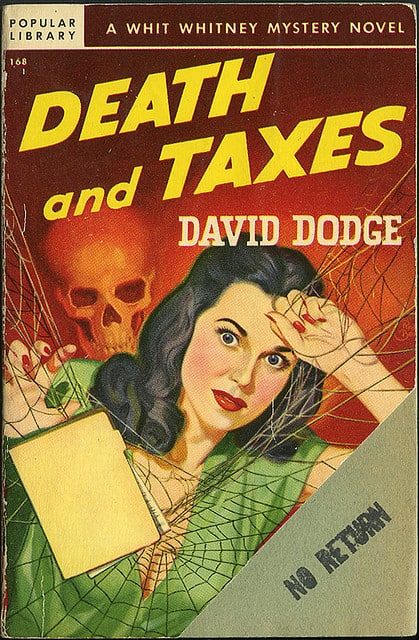 Death and taxes are inevitable. For some they are the same thing.
Fear of the tax man may be justified. As a creditor he has super collection powers that ensure that most people don’t have a smile on their face when they receive a notice from the Canadian Revenue Agency (CRA).
Among the things the agency can do are charge penalties and interest on all overdue accounts, withhold child tax credits and GST credits, and garnishee your bank account and pay. Without your consent, it can register a lien against your home. And it can take actions without going through a court process, as other creditors are forced to do.
But the news is not all bleak. Some people labour under the misconception that tax debts are not included under a personal bankruptcy. They in fact are, so when you receive your bankruptcy discharge, back taxes are usually included.
This is, if you owe the government less than $200,000 in back taxes. If you owe more in personal income tax debt, representing 75% or more of your total unsecured debts, then you must appear in bankruptcy court to decide if any conditions should apply to your discharge.
If you are undergoing a bankruptcy, then some special handling of your income taxes is required. The trustee will prepare two tax for you during the course of a year. A pre-bankruptcy income tax return must be filed from January 1 to the date of bankruptcy. Then a post-bankruptcy return must be filed from this date to the end of December.
If there are any funds in a return from the post-bankruptcy filing, then they are paid to creditors. Any taxes owed prior to the bankruptcy are discharged. And if there is an amount owing the government on the post-bankruptcy tax return, then it is up to you pay it.
Negotiating the ins and outs of taxes and bankruptcy can be a tricky and delicate process. Consult an expert at Richard Killen & Associates so you can discover your options and keep the tax man off your back.
Money Doesn’t Grow on Trees

For more than 20 years, Bill had run a successful Toronto tree care business, doing tree removals, pruning, planting and much more. His finances fell into the rhythm of the growing season. In the spring, the work would flood in and then taper off into the summer and fall.
In the winter, during his downtime, Bill would use credit cards to finance advertising, equipment purchases, insurance payments and personal expenses. He would depend on the work coming in the following spring to pay things off and get him ahead in the game.
The system worked until a few years ago, when a perfect storm of bad luck gave his credit heart rot. First the nature of the business had changed, with the Internet killing off traditional advertising channels and flooding the market with cut-rate competition, often under-insured and without much real experience, but still appealing to the price-conscious consumer.
Then there was the economy that had taken a plunge, limiting people’s budgets for yard care. “If they only have $3,000 and have a choice between getting tree work done or going on a vacation, what do you think they are going to choose?” says Bill.
But the leaf that broke the branch was the four trips on credit that he took to Costa Rica, arranging to bring his new wife back to Canada. “I thought that I’d make up the money with the spring boom,” he says, “except that that year it didn’t come.”
Bill found himself with a maxed out line of credit and three credit cards owing about $12,000 apiece. He was finally unable to make payments that were high as $5,000 a month. “I felt real shame,” he recalls. “Once I had walked around with a thousand bucks in my pocket and now I didn’t have enough money to buy food for my wife and baby. That’s really scary.”
A friend suggested he go to Richard Killen & Associates, to get a free consultation so he could understand his options to deal with the crisis. “When I went in to see Richard [Killen], I felt horrible,” he says. “But by the time, I left I felt excellent. It was the best day I had in a long time.”
A large part of the Licensed Insolvency Trustee’s job was to give Bill a reality check. Still deep “in denial,” he hoped that he could find someone to give him a loan to buy his way out of the crisis. Killen pointed out that throwing more money into the pit would not solve his financial problem and would in fact make his position worse.
When people see a trustee they learn that they have options other than to simply go bankrupt. One of the most important things the trustee should do is carefully explain the consequences of the various options available. In Bill’s case;, after fully digesting what Killen explained to him, he determined that the best course of action was bankruptcy.
Bill’s main concern was that he needed to keep his business going, because like everyone else he still had to earn a living for himself and his family. As Richard explained, a bankruptcy would not deprive Bill of that right. Even in complying with the legal requirements of the bankruptcy, Bill was able to keep all his equipment, including his tree truck, and chipper – the mainstays of his business.
It came as a big surprise to Bill to find out that a bankruptcy generally allows a self employed person to retain his ability to make a living. Most people believe or have heard that if they go bankrupt they lose everything. That’s just not the case.
Today discharged from his bankruptcy, Bill is more careful about how he uses credit for his business. He tries to pay as he goes with a debit card. He and his wife have a secured credit card with a $2,000 limit, ensuring any credit used is covered by what they have in the bank. “I pay off my balance right way,” he says.
As far as his seasonal business, last winter’s ice storm has proven to be a real boon, providing all the tree debris removal business he can handle in the spring. Still, Bill is acutely aware of how quickly his fortunes can change in this line of work, like a healthy maple suddenly brought down by blight.
Asked about what he could do to protect himself from such vagaries, he smiles and says, “We could always move back to Costa Rica. Money goes a lot further there.”
Are We Going to be Homeless?
 Hi. I’m Richard Killen from Richard Killen & Associates. Richard Killen has offices across the GTA. One of the most frequently asked questions I get as a Licensed Insolvency Trustee is, “If I go bankrupt or do a consumer proposal, will I lose my home?”
Well, probably not. Sounds evasive, doesn’t it? But it isn’t really. A bankruptcy or a consumer proposal is a legal process, so there are no guarantees. But my experience is if they want to most people keep their homes in a bankruptcy or proposal.
The problem is, people hear so many misleading things out there that they shy away from consulting a trustee like Richard Killen & Associates. They shouldn’t, because a trustee is the only one who can tell them what will happen in their specific case.
So call Richard Killen & Associates today for a free consultation at our office nearest you, 888-545-5365, or visit us online at killen.ca. It may be the most stress-relieving call you ever make.
Relief From Collection Agencies
 Hi. I’m Richard Killen, from Richard Killen & Associates. When you fall behind in your debt payments and creditors and agencies start calling, simply answering the phone can be an ordeal, especially if it’s never happened to you before.
As a Licensed Insolvency Trustee, I see people in this kind of situation every day. The good news is that we at Richard Killen can actually help you with this problem.
The Bankruptcy & Insolvency Act immediately puts a stop to collection calls, lawsuits, even garnishees, and you don’t even have to go bankrupt. But only a trustee like Richard Killen & Associates can provide this for you.
So call Richard Killen & Associates today for a free, no commitment consultation at our office nearest you. We have offices across the GTA. Call 888-545-5365. Or visit us online at killen.ca. It may be the most stress-relieving call you ever make.
Contact Richard Killen
FREE No Commitment Consultation
Contact us now for a fresh start!
“Serving Toronto & the GTA for over 25 years.”




Recent Blog Posts
- Why More Canadians Are Choosing Consumer Proposals for Debt Relief and Financial Recovery
- Consumer Proposal vs. Bankruptcy in Ontario: How Income and Assets Decide Your Best Route
- Are You Managing Debt or Just Surviving It? 10 Warning Signs It’s Time to Seek Debt Relief Solutions in the GTA
- Borrowing for Home Renovations in the GTA: Questions to Ask Before Taking on More Debt and How an LIT Can Help
- Back-to-School Expenses Are Adding Up: How to Prepare Without Going Into Debt Help Ontario