


File Your Return by April 30, Even If You Cannot Afford To Pay Taxes Owed
Hi I’m Richard Killen, if you’re like me you’re pretty fed up talking about covid and lockdowns so, I thought we’d talk about tax returns.

April 30th if you’re weren’t a self-employed person in 2020, is your deadline for filing your taxes. If you were self-employed you got till June 15th but the important thing I want to get
across is to get your return filed by the deadline. There are penalties for not doing so.
You can avoid all that just by getting it filed even if you can’t pay it, get it filed.
Richard Killen’s Christmas Message 2019

December is a very exciting and interesting time of year. From the official beginning of Winter to the various religious celebrations, such as Christmas and Hanukkah. It’s also a time for some philosophical pondering; reviewing the year past and formulating our resolutions for the coming year. Yes, December can be a very important month. It certainly is a good time to appreciate all the good things we are given, especially when they occur through no effort of our own.
True, not everything that happens to us is positive and easy to take. Everyone has the challenge of dealing with negative things like health problems and all the other personal trials life throws at us. Sometimes it feels like that’s all there is. But it isn’t, is it?
In the book I wrote, The Glass Is Half Full, I try to make the point that no matter how difficult our problems and challenges, the attitude with which we face them goes a long way to getting us through it and even turning these things around. Most importantly, we cannot let the bade things that happen to us define how we see ourselves.
I can’t think of a more valuable way to wind up the year. Maybe that’s why Christmas and Hanukkah take place at this time. For thousands of years these religious celebrations, and their cousins in other faiths, remind us of all the positive gifts life provides and how we should never take any of it for granted. They also encourage us to believe that facing up to our daily toil and turmoil courageously pays off for us in the end. That’s something we owe to ourselves and to those we love.
So with that thought, I’ll which all of you a very Merry Christmas and Happy Hanukkah and hope that you and yours are blessed with good health and happiness throughout 2020.
Consumer Proposals In Mississauga- What You Need To Know

In this video, Sean Killen, President of Richard Killen & Associates Ltd., answers frequently-asked questions on consumer proposals and bankruptcies in Mississauga.
Do you see more consumer proposals or bankruptcies in Mississauga?
Over the history of our office in Mississauga, there are about 60% consumer proposals. People coming into us don’t even want to hear anything about bankruptcy although we are required to go through it with them because it is part of the legalities.
Is there a minimum amount of debt required to be eligible for a consumer proposal or bankruptcy in Ontario?
There is a minimum under the law. The minimum would be $1,000. The law says you cannot declare yourself insolvent unless you meet the criteria of owing more than $1,000.
What’s the average duration of a proposal?
Consumer proposals are designed to be over a 5-year period because that’s the restriction that the law puts. They are not allowed to go beyond five years. However, the person has the freedom and the ability to shorten the term if they want with no interest, no penalties and no restrictions. Although most proposals are designed over five years, they end up paying out right around the four-year mark. Most of the time, after they get over about two and a half years, they start seeing the light at the end of the tunnel and want to pay it off faster. Therefore, they start ramping up their payments a little bit. Furthermore, they have a chance to get reorganized and start realizing the value in getting things out of the way.
What’s the status of the debt during a consumer proposal?
All the debts still exist. The creditors just agreed to sit back and see whether or not you can satisfy the agreement that was made. Ultimately, the final signatures are in place verifying that you have met the terms of your agreement. The debt still exists and can still blow back on you. Every once in a while, we’ll have a file that does that but very rarely will a file ever get past the halfway mark and then not complete. Most files that don’t make it fail in the first year and that’s just because everybody wants to do it but overextends themselves. They don’t properly accommodate to what the reality of their expenses really are. They think they can find money, they can cut back, and they can make this work just so that they can avoid bankruptcy.

If I go bankrupt, can I get a mortgage?
Getting a mortgage is still difficult because your debts still exist. Getting a mortgage renewal is not a problem. We always advise you to look for automatic renewal. You are already in the mortgage and you are already making payments. As long as you have never missed any payments, they’re just going to renew you, anyway.
If I Go Bankrupt or do a consumer proposal, can I get a car loan?
It’s easier to get a car loan while you’re in a proposal as opposed to bankruptcy. However, most lenders don’t really care whether you’re in a bankruptcy or a proposal. They’re just happy that you’re not dealing with outstanding debts and have creditors looming over you. However, you will always have to pay for it with higher interest rates to make sure they make enough money to cover their risks. They’re happy to lend it to you. Their money is in the car and not in you, necessarily. In general consumer proposals in Mississauga are significantly more popular than bankruptcies.
Consumer Proposal In Ontario: An Alternative To Bankruptcy

Most people don’t want to declare bankruptcy in Ontario. Therefore, when they would go to a licensed insolvency trustee, they would be looking for an alternative to bankruptcy. The alternative that a trustee in bankruptcy would provide is called a consumer proposal in Ontario. A consumer proposal is an agreement between what the debtor is willing to offer and what the creditor is willing to accept to resolve a financial debt problem. In a consumer proposal, the debtor will have an agreement with creditors through a trustee. This agreement is under the protection of Bankruptcy and Insolvency Act Law.
Benefits of A Consumer Proposal
A consumer proposal would allow the debtor to resolve his financial debt problems without going bankrupt. The consumer proposal in Toronto removes the ordinary options that creditors have to collect money from the debtors whenever they are behind with their payments. This means that creditors can’t sue the debtor when he is unable to pay his debts. Through the proposal, creditors are enforced to pay attention to what a debtor offers to them.
Since a consumer proposal is an open contract, the debtor can accelerate his payments. He can pay more than the agreed monthly plan, thus, speeding up the term.

How Consumer Proposal Works In Ontario
If a debtor becomes insolvent and can no longer pay his contracts, the courts are there to try and find a just resolution to it. Hence, the debtor will ask the court to discharge him from his debts.
Creditors can’t just accept any proposal that a debtor offers. It has to something reasonable. Therefore, a consumer proposal involves a process. First, the debtor has to figure out how much he can afford to pay on a monthly basis. As an alternative to bankruptcy, a consumer proposal is a matter of figuring out the budget of the debtor. Once he makes up his mind as to how much he can pay monthly, the trustee has to prepare all the paper works. As soon as the contract is ready, the trustee would give it to the creditors. Then, creditors will decide whether they accept the offer or not. When the creditor accepts the offer within the given period of time, then comes a new deal.
For example, you owe a creditor $40,000 worth of consumer debt. You make a proposal offering to pay $15,000. If the creditor finds it as it’s for their best interest, they would accept the offer. If they don’t accept it, negotiations may take place as part of the process. When the creditor accepts a debtor’s proposal, the court will then approves or ratifies it. The debtor will then make his monthly payments.

The consumer proposal process can take from 9 months to 3 years depending on circumstances. Sometimes, it can take longer than 3 years. However, for most people, the proposal has a straightforward process. It is just following administrative rules and as long as the debtor hasn’t done anything fraudulent, the courts will end up releasing him from his debts.
Consumer Proposal vs Bankruptcy
While both consumer proposal and bankruptcy have some things in common, such as both are court-supervised and release the debtor from being sued when he’s behind from his payments, consumer proposal and bankruptcy are different. The difference between bankruptcy and consumer proposal is that in the proposal, the debtor makes a deal with the creditor. In bankruptcy, there is no need for a deal with the creditor. The debtor would be asking the courts to release him from his debts. Since the debtor has signed contracts, the creditor has a right to expect those contracts to be fulfilled. Furthermore, the basic laws of contracts are there for a reason and quite valid. The number of Consumer proposals in Ontario exceeds the number of bankruptcies.
2018 INSOLVENCY & RESTRUCTURING EXCHANGE
On October 26, 2018, Richard Killen, Bonnie Bryan and Michele Meitz attended the 3rd annual 2018 Insolvency & Restructuring Exchange in Toronto.
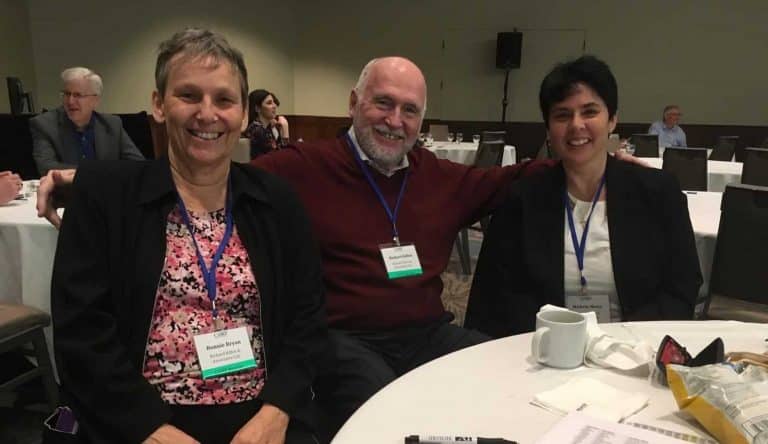
This is the Canadian Association of Insolvency and Restructuring Professionals (CAIRP) largest one day event of 2018. Almost ninety percent of Licensed Insolvency Trustees, licensed under Canada’s Bankruptcy and Insolvency Act are members of CAIRP.
CAIRP was created as a non-profit corporation in 1979 to advocate a fair, transparent and effective system of insolvency/restructuring administration throughout Canada.
This event is the best place for professionals from consumer and corporate restructuring practices to network and learn together.
We were glad to get the opportunity to meet and hear from fellow CAIRP members, lawyers, members of the judiciary, lenders and government officials as part of the days events.

A Person in Toronto Asks -Should I Go Bankrupt?

In this video, Richard Killen, a Licensed Insolvency Trustee in bankruptcy with offices across Toronto answers the question.
I don’t know how many times I have been asked by somebody during the course of the free consultation we provide to consumers at the beginning. What do you think, should I go bankrupt?
My answer is always the same for people. Its not up to me to tell you to go bankrupt.
Bankruptcy is a personal decision. What might work for one person, might not work for another person. Although what you can get from a trustee is a good idea of what is going to happen if you do a bankruptcy opposed to a consumer proposal.
So to answer the question, should I go bankrupt? My answer is you need to decide that.
What happens to my tax refund in a bankruptcy or consumer proposal in Brampton?

In this video, Richard Killen, a Licensed Insolvency Trustee in Ontario with offices in Durham region (Pickering & Oshawa) talks about whether a person’s income tax debt can be included in a personal bankruptcy in Ontario.
Something that comes as a big surprise to a lot of people is when they find out an income tax debt, an ordinary income tax debt is something that is dischargeable in a bankruptcy or can be taken care of in a consumer proposal. The people of Durham or people from across the Greater Toronto Area ask me that question numerous times. It is not a strange thing as ordinary income tax debt is treated as a debt.
There is nothing special about the fact it is a debt owed to the government. A debt to the government is not anything special in a bankruptcy situation. Therefore, in a bankruptcy in Durham or anywhere in Ontario, a tax debt is dischargeable.
If you are behind on your taxes or are have other debt problems, consider talking to one of our trustees and debt experts. We can help you review all your options for debt relief.
Contact our Durham office us for a fresh start at (905) 420-6565
Licensed Insolvency Trustee Explains Consumer Proposals

In this video, Richard explains in simple language how consumer proposals in Toronto work as many people are not terribly familiar with them. First of all, a proposal is a proposal. There are two types, consumer proposals and regular proposals.
The regular one has been around since day one, I think, 1920 or so, however, it was designed mainly for corporate and commercial situations. Instead of the company folding, they made a proposal to their creditors, to stay alive, keep the jobs going, keep the business running. Maybe they turn a corner and eventually everybody is happy.
But, what about the ordinary person? Until 1992, there was no mechanism in place for a similar approach to the debt. So, in 1992, Parliament amended the Bankruptcy Act, as it was called then and introduced something called a Consumer Proposal.
The proposal was designed for an ordinary person, instead of going bankrupt, which is what they did in those days, they could say “no, I don’t want to go bankrupt, I think I will try to reach a deal with my unsecured creditors”.
And the process is simple, it is streamlined compared to the commercial proposal. And it is really designed to make it as easy as possible for a person to make that accommodation. It’s supposed to end up with a better result for everybody concerned. That is the whole idea what Parliament was trying to achieve.
Today consumer proposals from a Licensed Insolvency Trustee are more popular than personal bankruptcy in Toronto.
Trustees Report
And most often, one of the reasons why I was a little late today, I had to go to my Mississauga office to meet with a person doing a proposal, consumer proposal, and I signed the report before I left, and the main argument is quite simple, the proposal is offering a net dividend, money in your pocket kind of thing, which is going to be twice as much as anything we can foresee out of the bankruptcy, best case scenario. So whether you think that is sufficient reason to accept the terms offered, that is your business. My call is, if the proposal is offering twice as much as the bankruptcy, I see that as a better deal for you guys. Now, you may be using a very different criteria to determine what is a good deal for you. The Administrator’s opinion on that question is not anything other than an opinion. It’s the old thing, where that opinion and a dollar ninety will get me a large coffee at Tim Horton’s.
Richard Killen on Tunedin with Lucy Zilio

In this video, Lucy Zilio talks with Richard Killen on Richard Killen & Associated 25th Anniversary.
Richard, a Licensed Insolvency Trustee (LIT) talks about more and more people with debt challenges choose a consumer proposal over bankruptcy in Toronto. Watch the video for more information.
Contact Richard Killen
FREE No Commitment Consultation
Contact us now for a fresh start!
“Serving Toronto & the GTA for over 25 years.”




Recent Blog Posts
- Why More Canadians Are Choosing Consumer Proposals for Debt Relief and Financial Recovery
- Consumer Proposal vs. Bankruptcy in Ontario: How Income and Assets Decide Your Best Route
- Are You Managing Debt or Just Surviving It? 10 Warning Signs It’s Time to Seek Debt Relief Solutions in the GTA
- Borrowing for Home Renovations in the GTA: Questions to Ask Before Taking on More Debt and How an LIT Can Help
- Back-to-School Expenses Are Adding Up: How to Prepare Without Going Into Debt Help Ontario