

What Too Much Debt Looks Like In The Greater Toronto Area
According to Statistics Canada, Canadian families now roughly owe $1.78 for every $1 they earn. These debts include consumer credit, mortgage and non-mortgage loans. Yes, we’ve got too much debt and piled up credit card charges for home renovations and eating out, for long-term car loans to buy up new vehicles, and not to mention those home equity lines of credit that allowed us to borrow up to 65% of the value of our home.
Some of us are already feeling the pinch of owing too much debt, with almost a 10% increase in the number of consumer insolvencies compared to last year, according to the latest figures from the Office of the Superintendent of Bankruptcy Canada.
“Personal insolvency growth continues as a result of consumer credit stress, individuals and families are struggling with overwhelming debts,” says Chantal Gingras, Chair of the Canadian Association of Insolvency and Restructuring Professionals (CAIRP).
And it seems we’re not slowing down. Despite years of counselling from the Bank of Canada against rising debt levels, many Canadians still aren’t lightening their debt load even though interest rates are rising and borrowing costs are climbing.
“Oh, we can manage our payments, we’re all good,” we keep saying. At least for now you can, but all that can change with a few unexpected calamities.
“If there is a period of slow economic growth in the future, Canadians could face job losses or decreased income putting them in an even worse position to manage their increasing debt levels,” says Scott Hannah, the Founder of the Credit Counselling Society.
Look, we all want to have a new car, a new home, dine in fine restaurants and enjoy luxury vacations, and grand shopping sprees. Who doesn’t, right? It’s great if we can afford them, there’s absolutely nothing wrong with spending on these things — as long as we don’t swim in debt for them.
But how exactly do you figure out that you’re close to being in over your head with too much debt? Let’s take a look at what too much debt looks like:
What Too Much Debt Looks Like to Lenders
In general, banks and other lenders look at your Total Debt Service Ratio, or TDSR, which is the portion of your income needed to cover all of your debts. Lenders will look at all of your monthly debt payments plus heating costs and taxes if you own your house and divide this by your gross income. Standard TDSR should not be higher than 40% of your income. So when you add up all your monthly credit card payments (minimum or partial payments each month), line of credit payment, car payment, mortgage payment, alimony and payments for heat and taxes, the total amount of all of these should not be more than 40% of your monthly gross income (which is your income before taxes). In other words, banks will not lend you money if your TDSR exceeds 40%.
If you are applying for a mortgage, lenders will also take into consideration your Gross Debt Servicing Ratio or GDSR in addition to your TDSR. GDSR is the portion of your gross income that goes towards paying all of your monthly housing costs, which can include principal mortgage payment, interest, property taxes, and heating costs (PITH) plus+ 50% of condo fees if applicable. The standard is less than 32%. Lenders will not give you a mortgage if your GDSR is more than 32%.
What Too Much Debt Looks Like to Your Budget
First order of business, ask yourself: How much do you need to live a lifestyle that is comfortable and acceptable to you? For this, you need to figure out the amount of money you need to support your way of living now as well as allow you to save for the future.
Identify all your sources of income – take home pay and extra income from a side job.
Calculate the cost of living expenses (also called non-discretionary expenses) – jot down every cent you spend that you must pay each month, including food, rent, mortgage, utilities, credit card payments, car loans, insurance payments, taxes and personal necessities
Calculate financial goals – amount for investing or saving after paying all non-discretionary expenses
Calculate discretionary expenses – amount for spending on non-essential items, restaurant dining, vacation expenses, luxury clothes, entertainment, etc.
Obviously, if you have no money remaining after paying bills then your income cannot support your financial goals as well as your unnecessary spending habits. If you must incur debt to pay for discretionary expenses, then you have too much debt.
If you routinely carry on debt, use your credit cards to pay for grocery bills or other utilities, constantly overdrawing your line of credit account or go overboard with an overdraft, and always have to take on a payday loan or a consolidation loan, these are warning signs that your budget is too tight and that you may have too much debt and may be heading for trouble.
Budgeting is really one of the smartest things you can do to keep yourself from accumulating too much debt. A budget will help you manage your finances and help you see how much debt you can afford to make payments on based on your income each month. It can really help you to live within your means and not spend more than you earn.
Too much debt can mean different things to different people, but the key is to figure out the amount of debt you have to how much money you make a month. The general rule is that your debt level should not be more than 40% of your monthly income.
Use the guidelines:
Total Debt Service Ratio (TDSR) over 40% = too much debt
Gross Debt Service Ratio (GDSR) over 32% = too much debt
Personal budget – more than half of your income is used to pay your debts = too much debt
Ideally, the less debt you owe, the better off you are. A little bit of debt is unavoidable, even necessary, to help you meet financial goals. Always live with a spending plan so you can manage debt payments efficiently and avoid going into too much debt. If your budget is too tight, you are close to the edge of having too much debt. When a financial crisis hits you, your budget is wiped out and you’ll be forced to take on debt for everything you need to pay for. Tap on all the resources you can to get back in control right away before your debt levels get out of hand.
When your debt and bills exceed your income, needless to say, you’re in a debt crisis and you need to make a committed decision to get out of debt without delay. Check out your debt solutions and options here.
Getting out of debt on your own
 Tax season is here. Like many Canadians you may discover that you now have a tax debt to add to your regular commercial debts: credit cards, loans, etc. This can make it a very stressful time of year. Of course, if you are one of the lucky few who has minimal or no regular debts and have the means to pay what you owe in taxes, you have no problem. If you’re not, you do.
As nervous as all this might make you, keep your eye on the end target – being debt free. It might help you deal with things more easily. Taking control of your situation comes with its own rewards: first, you’ll have less stress, and second, you’ll have more cashflow to put to savings.
To start, if you’ve decided to tackle your debts alone, you need a clear plan to help you determine:
Whether you can do this using only your own resources
How much can you afford to put towards paying off the debt?
How will you find the money to pay the debt?
How long it will take to pay off the debt?
Next, your payment options may be:
Making monthly minimum payments
Using your tax refund
Talking to your creditors to change your payment terms
Or, getting a consolidation loan
Do you know exactly how much you owe? This is a simple calculation. Be sure to include auto loans, payday loans, credit cards and other loans like family loans and medical bills. Start by itemizing your debts by gathering your most recent financial statements for all loans and credit cards. You may also decide to check your credit report from each of the credit bureaus (Equifax Canada and TransUnion Canada).
Next, list all our debts on a worksheet or computer program, specifying:
Name of creditor
Balance due
Interest rate
Minimum monthly payment
From this list you can create a monthly budget:
A: Add up our monthly income after taxes and other remittances.
B: Tally up all our monthly expenses, which will include our rent or mortgage payment, utility bills, childcare, student loan payments, insurance, groceries and other monthly household expenses.
C: Subtract all of our monthly expenses from our monthly income and what’s left is the amount we have left to pay off our debts. The formula would basically run this way: A minus B = C.
If you think the amount going towards your debt payments is too small, review your expense numbers and look for ways to reduce your spending. Also, consider ways to make more money so you can pay off your debt faster. It’s important to remember that the higher A is and the lower B is, the faster you’ll reach the finish line.
Another option is to try to obtain better terms. Now that you’ve come up with a clear repayment plan, you can try to negotiate better terms with your creditors. Remember: nothing is necessarily carved in stone. With a good plan, you actually have something of value to offer the creditors. Your main goal is to negotiate a more favourable interest rate. That would make the finish line closer still, which makes a big difference.
Here are some tips to use when speaking to your creditor about lowering your interest rates:
Ask if you qualify for a balance transfer on a zero interest or low rate interest credit card. This can save you a lot of money in terms of interest.
Check out student loan consolidation and income-based repayment plans that are exclusive to high level student loan debts.
Look into whether you can refinance a high-rate auto loan into a lower-rate.
Inquire if you can consolidate your debts into a personal loan or home equity loan.
Richard Killen, Licensed Insolvency Trustee and author of the new eBook The Glass is Half Full which is now available to be downloaded for free from iBooks, Amazon, Indigo and Kindle. Richard Killen & Associates, with offices conveniently located across the GTA, have been helping Canadians resolve their debt issues since 1992.
2 Things You Can Do To Take Control of Debt

If you are struggling with debt, you are certainly not alone. Most Canadians, if not all, have debt. Some of us have just a little bit of debt and that’s completely normal, and we must know how to take measures to keep it at a manageable level and avoid becoming trapped in a cycle of debt.
On the other hand, there are also some of us who have a large amount of debt and it’s creating stressful financial issues as we try and juggle payments on the debts and put more effort into meeting the monthly payments on time.
And then there are a number of Canadians, unfortunately, who have out-of-control debt that has really become a burdensome problem and causing them to feel a deep sense of shame, guilt, and embarrassment to the point that they suffer physical and psychological health issues, such as anxiety and depression.
Managing debt is the very first step to prevent it from getting out of control. That’s really the rule of thumb when you take on credit. Once you take on any type of debt, it can affect your entire financial life. That’s why it’s so important that you take the steps towards being the one in control of your debt, instead of debt taking over your life. If you are in control of your debt, it will make you feel confident about being able to pay it off in a timely manner and you won’t be afraid about facing any financial demons over time.
Here are two important things to understand to help you always take control of your debt:
Know how much you owe.
Monitor your debt so that you are always aware of how much you owe. You monitor your debt simply by creating a detailed budget to plan your expenses. A budget will provide very important information for effective debt management. It will show you:
- The net income you have available to spend.
- What your regular expenses are (e.g. rent, childcare, food, transportation, savings).
- The total of the payments you have to make each month for your debts (e.g. credit card debts, mortgage, car loan and other loans).
Make sure you list each of your debts, one by one, indicating the total amount each creditor it is owed, the monthly payment you need to make, and when the due date is. Check your credit report to verify all your existing debts and to make sure you didn’t miss putting something on your list. Total up your expenses and payments and subtract this from your net monthly income. Depending on how much money you have left over at the end of the month, you’ll need to decide whether you have too much debt or if you feel comfortable with the level of debt you have now. Make it a point to update your debt list as you make payments on the due date. This will help you to stay aware of how much you owe all the time and prevent you from making any financial decisions that will lead to potential debt problems in future.
Recognize if you need help.
For some people, following a realistic budget to pay off debts and plan expenses is enough for them to take control of their debt. However, for others who have bigger debt problems and budgeting is not enough, there may be a need to create a manageable repayment plan to help you pay your debt and other bills each month in order to regain control of your finances.
As soon as you find that you’re struggling with payments and feel that you may have a potential issue on your hands, maybe you’ve made a late payment or think you’re not going to make a payment on time, reach out to your lender right away to find out if they can offer some ways for you to catch up or stay on time with payments. You’d be surprised that there are a number of creditors who are more than willing to work with borrowers who reach out to them for help before they are way behind on payments. Creditors may lower your interest rate, reduce your payment or even temporarily suspend your payments for a number of months until you get back on your feet. The key is not to wait until you’re delinquent because you have more options if you have no missed payments.
If you really cannot pay even the minimum payments on your debts or cannot even meet your basic monthly needs such as buy food or pay the electric bill, then your debt problems are more severe and you may need a more permanent solution to help reduce or eliminate your debts entirely.
At this point, the best thing you can do to take control of your debt is to talk to a debt professional. A licensed insolvency trustee is the only debt expert in Canada licensed by the federal government to give advice about other options for debt relief such as a debt management plan, a consumer proposal or a bankruptcy. Each of these debt solutions have advantages and disadvantages and a trustee will be able to explain each option thoroughly and answer any questions you may have. The trustee will do an in-depth assessment of your financial situation and be able to make recommendations on the best option to solve your debt problems. By getting the help you need, you can get back in the driver’s seat and take back control of debt with some good advice instead of ignoring your debt problem and making matters worse like leading you to declaring bankruptcy.
Taking control of debt is a commitment. You need to be able to manage it responsibly. Even if you have just a little bit of debt, you need to exercise restraint to keep it at a level you are able to manage. If you have more than just a little debt, you need a little more self-discipline to have more control over your debts. If you have more debt than you can handle, it would require you to seek the help you need and make certain sacrifices to get back on top of things.
Debt problems and financial challenges are inevitable in life. They will happen to each one of us at some level and at some point in our life. It’s important to realize that there are solutions to debt problems no matter how terrible your situation may seem to be. There is no need to spend your entire life in debt and allow it to ruin your other financial goals. All you need to do is make the decision to take control of debt and do all that is necessary to improve your financial situation.
Good and not-so-good debt: What’s the difference?
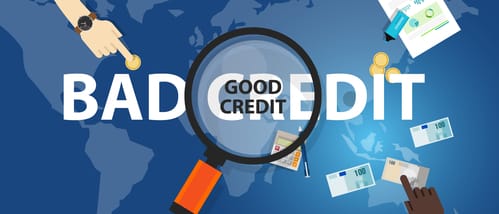
If you use credit with good judgment and with a solid plan to pay it off, you stand a good chance of profiting from the funds you borrowed. It’s important to remember that when it comes to taking on debt, you should approach the decision carefully and only take on debts that will grow your financial worth and/or positively affect your life. The best way to know how to control debt — along with most things in our lives — is to look before you leap. Be sure to ask yourself if the credit is necessary, what will it involve, is there a better way to get what you want than by incurring this debt and how fast will you be able to get rid of it. For example, ask yourself:
- What is its purpose, i.e. the long-term goals and benefits you will achieve as a result of taking on the debt?
- How you will pay it back?
- And, where it fits within your cash-flow budget?
One way to ensure that taking on new debt won’t be an issue for you is to understand the difference between good debt and not-so-good debt.
Good debt generally has the following qualities:
- It is taken on for something that will likely not lose value over time
- It will leave us better off in the long-term and provide us with lasting and, with luck, ever-increasing benefits
- The debt will not have negative consequences on our present and near-future overall financial position
- It will help us manage our finances more effectively
- It will help leverage your wealth
- The debt is used in a responsible way, with details carefully thought out and with the long- term view in mind
- There is a clear and specific reason for taking out the debt
- There is a realistic plan for paying back the debt as quickly as possible
- The debt was obtained through the cheapest and most effective borrowing method available, with the most reasonable interest rate, term and charges
Not-so-good debt has the following features:
- It feels like free money
- It often provides some form of instant gratification
- It will not provide some increase in value to us over time
- It reduces your wealth or offers no opportunities to grow wealth
- It keeps growing, because of the interest rate and supplementary charges
- It seems like it will never be paid off
- It may have an unrealistic repayment plan
How to stay out of debt
The fact is that no matter how much our financial life may have jumped the rails, you always have the power to get it back on track, regain control and avoid debt situations like bankruptcy. You’ve also seen how much of a role our attitude plays in grasping that empowerment. Seeing the glass to be half-full rather than half-empty can make all the difference in the world. If you can manage your credit wisely, you can enjoy the many benefits it offers. As you know, it can be a very useful tool by helping you accomplish important life goals, boost your net worth over time and enhance your quality of life, just so long as you remain the one in charge.
The next logical question likely is: “What can I do to make sure that I do remain the one in control of my debt?” Of course, the short flippant answer is: don’t borrow. But as we’ve already seen, there are times that taking on debt will be necessary. The majority of us may see abstention as too lofty a goal. It can be done, but very few of us will be in the envious financial position of having the money to satisfy all our needs, and our wants, without borrowing. The trick will be to manage it properly and not allow it to take control.
Consider sticking the following reminders to your fridge to help keep you on the straight and narrow in 2019:
- Best way is to stay out of debt completely, don’t borrow full stop. But some are not avoidable:
- Mortgages
- Car loans
- Student Loans
- Impulse — clothing, food, entertainment
- f you actually need to take on some debt, what is it that you are trying to accomplish?
- Have a plan – this is the goal of how you’ll pay of the debt
- Develop good habits and stick to positive financial routines
- Most important, learn to manage your cash flow
- Create a simple cash flow spreadsheet or table; this can also be done through money management software like Intuit Quicken or MS Money
- Make tracking your money an automatic process; enter and update your transactions regularly
- Remember, when it comes to tackling your debt:
- Be honest with yourself about what went wrong
- Make a decision to tackle the problem
- Seek professional advice to understand your options; remember, you’re not alone, keep your pride in check
- Accept the reality of the situation and stay positive
- if it becomes too much for you to handle, never be afraid to consult with a debt expert or professional.
Avoid post-holiday debt stress — create a budget

As we get closer to the holiday season, there is one thing we can all agree upon: the holidays stress us out. Whether we’re juggling an increased social calendar, rushing to finish work before the end of the year, or trying to grab that last-minute gift, we’re all feeling somewhat overwhelmed. Along with all this rushing around is a tendency to over spend. We know we probably shouldn’t, but we tend to shrug it off and think about the consequences later. But then the first credit card bill arrives in January and we’re hit with one of the most difficult kind of stresses to deal with: debt stress.
Debt stress has an overarching effect on our lives. It affects our credit score, our financial independence, career choices, well-being and standard of living. In October, Equifax Canada announced that consumer debt continues to rise; in fact it’s up 5.4% since last year. But, we have it in our power to avoid the pitfalls and handle debt properly to achieve positive and desirable results. To ensure we don’t let debt control us it’s important to remember the difference between good debt and not-so-good debt. For example, good debt should leave us better off in the long-term and provide us with lasting benefits. By contrast, not-so-good debt will not provide some increase in value to us over time and tends to reduce our wealth.
Also, another way to control our debt at this time of the year is to understand how much we currently owe. Then we should set a holiday spending budget to ensure we don’t continue to overextend ourselves financially.
Calculate how much cash and debt you currently have: On a spreadsheet or paper and pencil, list your assets (what you own) and your liabilities (what you owe). Now calculate your net worth by adding up your assets and then subtracting your liabilities. If your net worth is positive, you’re doing a great job of managing your money. If your net worth is negative — or “in the red” — it’s time to be honest with yourself and not take on any more debt this holiday season.
Make a list, pay in cash and stick to your plan: Consider this list a mini-budget. Itemize what you realistically think you’ll need over the holidays, like modest gifts, food, refreshments and decorations. Based on the calculation you did above to identify how much you can afford and put an affordable spending limit next to each category. Your goal is to stick to this plan. There are often great sales in November and December, so do your research to find the best bargains.
Enjoy the season: It is possible to have a great festive season without spending a lot of money. Besides, it’s the thought that counts, not the expensive price tag. It’s also possible to use credit with good judgment and with a solid plan to pay it off. Happy holidays!
Richard Killen, Licensed Insolvency Trustee in bankruptcy and author of the new eBook The Glass is Half Full which is now available to be downloaded for free on this page.
2018 INSOLVENCY & RESTRUCTURING EXCHANGE
On October 26, 2018, Richard Killen, Bonnie Bryan and Michele Meitz attended the 3rd annual 2018 Insolvency & Restructuring Exchange in Toronto.

This is the Canadian Association of Insolvency and Restructuring Professionals (CAIRP) largest one day event of 2018. Almost ninety percent of Licensed Insolvency Trustees, licensed under Canada’s Bankruptcy and Insolvency Act are members of CAIRP.
CAIRP was created as a non-profit corporation in 1979 to advocate a fair, transparent and effective system of insolvency/restructuring administration throughout Canada.
This event is the best place for professionals from consumer and corporate restructuring practices to network and learn together.
We were glad to get the opportunity to meet and hear from fellow CAIRP members, lawyers, members of the judiciary, lenders and government officials as part of the days events.

A Person in Toronto Asks -Should I Go Bankrupt?

In this video, Richard Killen, a Licensed Insolvency Trustee in bankruptcy with offices across Toronto answers the question.
I don’t know how many times I have been asked by somebody during the course of the free consultation we provide to consumers at the beginning. What do you think, should I go bankrupt?
My answer is always the same for people. Its not up to me to tell you to go bankrupt.
Bankruptcy is a personal decision. What might work for one person, might not work for another person. Although what you can get from a trustee is a good idea of what is going to happen if you do a bankruptcy opposed to a consumer proposal.
So to answer the question, should I go bankrupt? My answer is you need to decide that.
What happens to my tax refund in a bankruptcy or consumer proposal in Brampton?

In this video, Richard Killen, a Licensed Insolvency Trustee in Ontario with offices in Durham region (Pickering & Oshawa) talks about whether a person’s income tax debt can be included in a personal bankruptcy in Ontario.
Something that comes as a big surprise to a lot of people is when they find out an income tax debt, an ordinary income tax debt is something that is dischargeable in a bankruptcy or can be taken care of in a consumer proposal. The people of Durham or people from across the Greater Toronto Area ask me that question numerous times. It is not a strange thing as ordinary income tax debt is treated as a debt.
There is nothing special about the fact it is a debt owed to the government. A debt to the government is not anything special in a bankruptcy situation. Therefore, in a bankruptcy in Durham or anywhere in Ontario, a tax debt is dischargeable.
If you are behind on your taxes or are have other debt problems, consider talking to one of our trustees and debt experts. We can help you review all your options for debt relief.
Contact our Durham office us for a fresh start at (905) 420-6565
Can I Include Income Tax Debt In My Bankruptcy in Durham, Ontario?

In this video, Richard Killen, a Licensed Insolvency Trustee in Ontario with offices in Durham region (Pickering & Oshawa) talks about whether a person’s income tax debt can be included in a personal bankruptcy in Ontario.
Something that comes as a big surprise to a lot of people is when they find out an income tax debt, an ordinary income tax debt is something that is dischargeable in a bankruptcy or can be taken care of in a consumer proposal. The people of Durham or people from across the Greater Toronto Area ask me that question numerous times. It is not a strange thing as ordinary income tax debt is treated as a debt.
There is nothing special about the fact it is a debt owed to the government. A debt to the government is not anything special in a bankruptcy situation. Therefore, in a bankruptcy in Durham or anywhere in Ontario, a tax debt is dischargeable.
If you are behind on your taxes or are have other debt problems, consider talking to one of our trustees. We can help you review all your options for debt relief.
Contact our Durham office us for a fresh start at (905) 420-6565
What is the minimum debt required to Declare Bankruptcy in Scarborough Ontario?
In this video, Richard Killen, a Licensed Insolvency Trustee in bankruptcy in Scarborough Ontario talks about the minimum requirements for personal bankruptcy in Ontario.
I often am asked by people in Scarborough, what is the minimum debt before I can declare bankruptcy in Ontario? Many people feel that if they do not owe that much, perhaps its too low to get a trustee involved.
Legally, whether it is in Scarborough or anywhere else in Ontario, the minimum you must owe is $1000. Of course there are other qualifications as well. However as far as the actual amount it is only one thousand dollars. Therefore, as long as the amount you owe is greater than the minimum, you qualify to use the bankruptcy act.
We welcome any questions you may have on bankruptcy, debt counselling or consumer proposals in Ontario.
Contact us for a fresh start (416) 285-9511
Contact Richard Killen
FREE No Commitment Consultation
Contact us now for a fresh start!
“Serving Toronto & the GTA for over 25 years.”

Recent Blog Posts
- Why More Canadians Are Choosing Consumer Proposals for Debt Relief and Financial Recovery
- Consumer Proposal vs. Bankruptcy in Ontario: How Income and Assets Decide Your Best Route
- Are You Managing Debt or Just Surviving It? 10 Warning Signs It’s Time to Seek Debt Relief Solutions in the GTA
- Borrowing for Home Renovations in the GTA: Questions to Ask Before Taking on More Debt and How an LIT Can Help
- Back-to-School Expenses Are Adding Up: How to Prepare Without Going Into Debt Help Ontario