


How Much Debt is too Much Debt?
 Canadians like their stuff. They’re not afraid to go into debt for their new cars, homes, large-screen TVs, and other items, big-ticket and small. As a result, many of us often ask the question, “Am I in too much debt?”
Moody’s, one of the world’s leading credit agencies, recently gave Canada an AAA rating for its “relatively solid economic performance” and stable banking system. But at the same time, it warns that the country’s high household debt levels and soaring house prices pose “a potential risk” to those strengths.
Even though debt isn’t usually a good thing, sometimes it can be justified. Rather than simply buying something we can’t afford, debt can be a shrewd way to get ahead if you’re reasonably sure that you will have the means to pay it off.
For example, a graduating lawyer expecting to make $250,000 could probably take on a mortgage and expect to pay it off in a decade, whereas someone freelancing in a shakier industry might find themselves on the road to financial disaster owing this much money.
But how much debt is “too much debt”?
A recent Financial Post article reports:
Statistics Canada says that the average level of household credit market debt to disposable income was 163.6% between April and June. That means we owe almost $1.64 for every $1 that we make. . . . Economists have said that a more stable ratio would be between 110% and 120%. The ratio was closer to those figures in the early 2000s when the economy was on firmer ground, says Cris deRitis, senior director at Moody’s Analytics.
From the bank’s point of view, when you total your monthly debt payments along with heating and taxes for your house, this number should not exceed 40% of your income. Lenders call this the Total Debt Servicing Ratio (TDSR). If you exceed this ratio, then you will have a hard time borrowing money.
When you make out a budget, you can figure out what minimal amount you need to support your lifestyle. Once you know this number, you can figure out how much money you can put towards your debts. If you don’t have enough money left over to pay these, then your debt level is too high.
And keep in mind that the bank doesn’t know this number when they offer you more credit. Just because you’re eligible for increased credit doesn’t mean you can afford it.
Generally speaking, if you’re worried that your debt level is too high, it probably is. The fastest way of all to measure this is the 50% rule. If more than 50% of your income is going to servicing your debt load, your debt is too high. No question about it.
So in the end, if you’re having trouble servicing your debts and would like some help in assessing your prospects and options for dealing with the problem, call us at Richard Killen & Associates. We can help you sort it out and the debt consultation is free.
What Happens If You Default On A Consumer Proposal?
 Do you have a consumer proposal that you are struggling to pay and you are wondering “What happens if you default on a consumer proposal”? As a rule, it’s not good to default on any kind of debt.
A proposal for an individual – most commonly called a “consumer proposal” – is one of the two ways of addressing a severe debt issue under the Canadian Bankruptcy and Insolvency Act. The other, of course, is bankruptcy.
Using the services of a Licensed Insolvency Trustee, like Richard Killen & Associates, a consumer proposal is a deal that you strike with your creditors to pay back part or all of what you owe, according to your means, either through a lump-sum payment or, more likely, a series of monthly payments. As long as you make the required payments, your creditors can take no action against you.
Once all the payments are made, you are freed from the spectre of your debt.
However, what happens if you miss some of the payments agreed upon in the proposal?
Since the proposal is a legally binding agreement, this would be a serious situation. If you fail to meet the terms of your proposal, especially by missing three months of payments, the consumer proposal is annulled automatically. (You can miss up to two payments without triggering the consumer proposal annulment. The missing payments will be tacked to the end of your term.)
And what happens after a consumer proposal is annulled? Well, your creditors are free to once again start collections and/or take legal proceedings against you. And you may be faced with bankruptcy.
If you start falling behind in your proposal payments and you know that your shifting financial situation is going to make it hard to make them up, then you need to see your trustee and review your situation. You might be able to amend the proposal and solve the problem that way. You might have other options, but you’ll need to see the trustee. He or she can tell you what you need to know.
But fair warning: if you amend your consumer proposal, it will mean that your original one no longer applies. Your amended proposal will have to go through the creditor approval process again, and if your creditors refuse the amended version, you cannot just go back to the original terms.

This is why we at Richard Killen & Associates believe it is critical that we sit down with you at the beginning of the process and work out reasonable terms for a consumer proposal. That is the only way you can have peace of mind knowing that you are getting your financial life back on track – one payment at a time. If you are at the point where you are asking what happens if you default on a consumer proposal, it’s time to talk to a licensed trustee before you default.
Rich, Richer. Poor, Poorer
 Apparently the wealth gap is growing in this country, as the rich get richer and the poor get poorer.
So says the Broadbent Institute, supporting its case with StatsCan numbers. Canada’s poorest 10% saw their net worth plummet some 150% since 2005, while the top 10% jumped nearly 42% during the same time, with a median net worth of $2.1 million.
While a growing income gap has been well reported, the wealth gap is an even broader measure, taking into account all assets, including housing and investment, minus debts.
“Contrary to rosy reports of rising net worth and a post-recession recovery, these new numbers sound the alarm on Canada’s wealth inequality problem,” says Rick Smith, executive director of the Ottawa-based think tank, in a Toronto Star article.
By 2012, the bottom 10% saw their debts outweigh their assets by $5,100. Seven years earlier, this number was only $2,000. The bottom 50% of Canadians own just 6% of the wealth, while the bottom 30% own just 1%, the institute says.
“Looking at this broad picture of wealth using new Statistics Canada data released to the Broadbent institute, this report shows deep and persistent inequality,” the institute adds. “This unequal distribution . . . challenges the narrative that suggests Canadians are getting wealthier across the board.”
If you find your own wealth gap growing, with debts overwhelming your assets, then come to Richard Killen & Associates for a free consultation, to see how you can start trending in the right direction.
Back to School Budgeting Tips
 Parents everywhere can breathe a sigh of relief as their kids go back to school. However their happiness at no longer having to keep young ones amused is tempered by the worry of school-related costs: supplies, class trips, clothing, etc.
We feel your pain. Here are some ways to lessen school sticker shock
Take Stock
Usually panicked about the approach of school, parents rush out to buy the things they think their kids need, racking up bills fast and furious.
Take a deep breath and take inventory. What in fact do your kids really need?
Check their closets and clothes drawers. Maybe some of their garments and shoes can be used again. They don’t need umpteen new outfits.
Call their teacher and see what supplies the students will require through the year. Don’t just guess. And again, check what your child already has. Perhaps you’ll find that she has kept notebooks she didn’t use last year.
Make a list and, when you go shopping, stick to it. Don’t make impulse buys.
Go Cheap or Go Home
Of course, look for sales. Don’t be afraid to go to thrift stores, used stores, outlet malls or massive department stores that buy a wide range of items in bulk, reducing price tags.
Do you have friends with kids about he same age? Perhaps they have extras of things you need and vice-versa. Do an exchange. Don’t feel ashamed. There are whole economies built on the barter system.
Speaking of swaps and sales, don’t forget web sources. Besides the usual online retailers there are sites like eBay, Craigslist and Kijiji, where parents can find bargains and do swaps.
If you do go to an online retailer, first google their name and “coupon” to see if there are any savings to be had.
Don’t Get Guilted into Overspending
When shopping don’t get guilted into buying a name brand or the item with the highest price tag. With backpacks, for example, there are a huge number of styles with some at the top end sporting eye-popping price tags. Take a breath, ignore the prices and look for ones that seem sturdy, look nice and will do the job. If among these there’s one for sale at a reasonable price, go for it – proudly.
Procrastination May Work in Your Favour
Perhaps you are already feeling guilty because you should have done your shopping earlier. Rejoice. Waiting a little works in your favour. After getting through the prime sales time of late August, retailers will start putting on sales in September to get rid of inventory. So you can save, save, save.
Also, why buy everything in one shot? Purchase the clothes that your child needs now but don’t buy a school year’s worth. Shop for clothes as the year goes on. That way you can get just what they need, when they need it, and you can keep your eye open for sales.
This way you can spread your pain around.
10 Signs of Debt Trouble
 If you don’t live in Egypt, being in denial is a bad thing.
Most of us carry some form of debt, whether it’s a car loan or a credit card balance that we just can’t manage to pay off this month. But when does debt load become dangerous?
Well, one sign is when you don’t want to think about it and are kept up nights with stomach-twisting anxiety. The problem scares you so much you put your head in the sand and keep spending as usual.
If you think you have a problem, you probably do. But here are 10 more telling signs that you are sinking too far into a financial morass:
- You frequently pay bills after their due date, incurring secondary notices and penalty charges.
- Creditors are calling about unpaid bills.
- You regularly bounce cheques and overdraw your bank accounts, causing you embarrassment and triggering bank penalties.
- You use one credit card to pay the balance on the other, or use it to pay other bills or to buy necessities.
- You pay only the minimum balance on credit card bills.
- You’ve been denied credit because your debt ratio is too high, or need a co-signor for a loan because you are too much of a risk by yourself.
- You hit up family and friends for loans to make ends meet.
- You don’t know how much debt you’re really in, because you’re afraid to hear the number.
- You hide purchases and debt problems from your family, or you fight a lot with your spouse over debt issues.
- An unexpected expense, such as a car repair, sends you into panic mode.
Of course, just not thinking about money problems, or running way from them, doesn’t work. They always manage to find you. The best way to deal with them is head on, using the advice of a trusted expert. At Richard Killen & Associates, we can lead you through the appropriate responses to your particular situation, whether it is debt consolidation, a consumer proposal or bankruptcy.
Contact us for a free consultation – it will be the most stress-relieving call you will ever make.
Scared to Death of Taxes
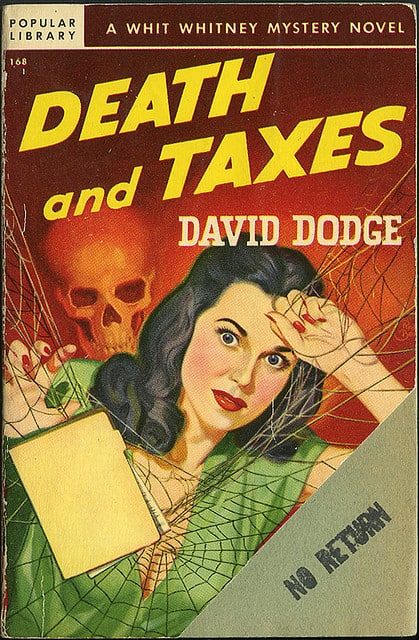 Death and taxes are inevitable. For some they are the same thing.
Fear of the tax man may be justified. As a creditor he has super collection powers that ensure that most people don’t have a smile on their face when they receive a notice from the Canadian Revenue Agency (CRA).
Among the things the agency can do are charge penalties and interest on all overdue accounts, withhold child tax credits and GST credits, and garnishee your bank account and pay. Without your consent, it can register a lien against your home. And it can take actions without going through a court process, as other creditors are forced to do.
But the news is not all bleak. Some people labour under the misconception that tax debts are not included under a personal bankruptcy. They in fact are, so when you receive your bankruptcy discharge, back taxes are usually included.
This is, if you owe the government less than $200,000 in back taxes. If you owe more in personal income tax debt, representing 75% or more of your total unsecured debts, then you must appear in bankruptcy court to decide if any conditions should apply to your discharge.
If you are undergoing a bankruptcy, then some special handling of your income taxes is required. The trustee will prepare two tax for you during the course of a year. A pre-bankruptcy income tax return must be filed from January 1 to the date of bankruptcy. Then a post-bankruptcy return must be filed from this date to the end of December.
If there are any funds in a return from the post-bankruptcy filing, then they are paid to creditors. Any taxes owed prior to the bankruptcy are discharged. And if there is an amount owing the government on the post-bankruptcy tax return, then it is up to you pay it.
Negotiating the ins and outs of taxes and bankruptcy can be a tricky and delicate process. Consult an expert at Richard Killen & Associates so you can discover your options and keep the tax man off your back.
What Happens to My Retirement?

If that comes about, one of the concerns you may have is what will happen to your retirement savings and your pension? Well, generally speaking, you have nothing to worry about. Though the legal process can get a little complicated, for the most part nothing will happen to your RRSPs, RIF, LIF, especially your government pension or company pension.
Other kinds of plans might sometimes be affected, depending on various factors. However, you don’t have to wonder or worry; you can get the facts from us, Richard Killen & Associates. That’s what we’re here for.
So call Richard Killen & Associates today for a free consultation at our office nearest you. We have offices across the GTA. 888-545-5365. Or visit us online at killen.ca. It may be the most stress-relieving call you ever make.
See also “A New Problem for the Old.”
Gail Vaz Oxlade Budget Calculator for the True Cost of Debt

The Gail Vaz Oxlade budget calculator can be used to calculate the true cost of debt. Many people do not have a clear idea of what their debt really costs them, whether it is a credit card balance or a student loan.
Financial writer Gail Vaz-Oxlade points out in “How Much is Your Debt Costing You?” that if someone buys a $2,000 TV on credit, with an 18% interest rate, the minimum monthly payment would be about $40. Of that payment, only about $10 would go to the principle and rest would cover the interest. So if you just made minimum payments, the $2,000 TV would cost you $7,000 and would take 30 years to pay off.
To tally up the true costs of your debts, the sites for many financial institutions and credit-counselling agencies have calculators available for free use. All you need to do is to punch in your numbers and weep.
Credit Counselling Canada, the national association of non-profit credit counselling and government agencies, offers links to a variety of calculators. They include ones designed to help you to get a clear picture of your debt situation, change your spending patterns for your home budget, determine repayment strategies for your loans and lines of credit, track your weekly expenses and show you how to reach your savings goal. Its SMART (Specific, Measurable, Attainable, Relevant, Time-Bound) Worksheet can aid you in setting financial goals and putting them in action.

Most banks offer calculators to help you figure the cost of loans before you sign on the dotted line. Typical is TD Canada Trust’s Debt Repayment Calculator. Select your type of debt, the amount of the loan and interest rate, and then you’ll get back the numbers for how much you’ll pay in total, over what period of time. If the numbers for your debts become oppressive, TD also offers a Debt Consolidation Loan Calculator, showing how you can ease your situation by consolidating all your debts into a single loan, with one monthly payment that is probably lower than what you are paying overall now.
Students about to enter university or college, and their parents, should point their browsers to the Government of Canada’s CanLearn Loan Repayment Estimator. Enter your settings and it will help you estimate the monthly payments you’ll need to make to repay your Canada Student Loan or other government student loans. Simply enter the total amount of your loan(s), select the interest rate and grace period options, and decide on the number of monthly payments that you would like to make. You can also compare repayment options. The trick is to pay off the student loan before you hit retirement age.
Just dial 1-888-545-5365 and we can start talking about how you can improve your financial situation.
If you are in debt and have questions about the Gail Vaz Oxlade budget calculator, we would be happy to help you find a proper solution to your problem.
It’s the Little Savings That Count
We all know about the big buys that do damage to our bank accounts: homes, cars, vacations, etc. But equally insidious are the small regular purchases that we don’t really notice but add up over time, whether it’s expensive designer coffee or unused gym memberships. Here are five things you can do without, or with less of, to plump up the pocketbook.
1. Stop Going to Coffee Shops
Do you get a nice coffee from Starbucks or Timmy Ho’s everyday before getting down to work? You can be spending a couple of bucks a day or much more if you are getting some of the premium coffee-based drinks. For less than you spend in a month in coffee shops you can get your own coffee machine at home (for under $20 at the low end!) and a pound of something fair trade and delicious. That way, when you treat yourself out, it is a treat and not part of the daily grind of starting your heart for work.
2. Give up Your Gym Membership
Lots of us have unused gym memberships, meaning we’re paying hefty monthly fees for no reason. So give it up. This is not to say you should give up exercise. Do more at home. Take up walking or bike riding and, if you live close enough, bike it or hoof it to work, saving big bucks on the gas and parking of a car commute. If you like to do your aerobics or Pilates in a group, check out the local rec or community centre, where classes may be cheap or even free.
3. Stop Impulse Buying
If you’re thinking about buying something you’re not sure that you really need, make yourself wait 30 days before making the purchase. Often the impulse will pass. Or if you’re in a store shopping and see something you want to buy on the spur of the moment, circle way and wait 20 minutes before picking it up. Your consumer desire may wane. And when grocery shopping, make a list and stick to it. Yes, the tub of Häagen-Dazs may be half price but it doesn’t save you money if you weren’t planning t0 buy it in the first place.
4. Save Money on Your Entertainment Media
Spending too much on your cable TV package and pay per view? Then downgrade or eliminate your service and get movies and TV shows through low-cost services like Netflix and Redbox. Or better yet read a book. Don’t buy a book but go to your library and take one out. It’s free. You can also take out movies and even put a dent in your iTunes habit by renting CDs of music that you can rip to your MP3 player (ask your kids how).
5. Check Your Phone Plan
If you have a cellphone, check your usage to see if your plan is the most economical one for you. Also, since signing on, the phone company may have introduced lower priced plans, with unlimited Canada-wide calling for example, that they are in no hurry to tell you about. And you may be able to negotiate lower rates than the ones offered. But don’t do this at the phone company’s retail shop. They have to stick to the listed prices. Call your phone company, make noises about quitting and when they pass you on to their retention expert, swoop in and make a deal, citing the low prices to be had elsewhere (do your research). Also, if you don’t use your cellphone much, consider switching to a pay-as-you go plan. And finally, if you have both a cellphone and landline, get rid of one. Just because you grew up with a rotary phone doesn’t mean you need one now.
There are probably many other things going on in your life that drain your financial resources without giving you much (or any) value in return. Sit down and make an inventory. You’ll very likely shock yourself. Remember, you are supposed to be in charge of your life, not Starbucks.
Relief From Collection Agencies
 Hi. I’m Richard Killen, from Richard Killen & Associates. When you fall behind in your debt payments and creditors and agencies start calling, simply answering the phone can be an ordeal, especially if it’s never happened to you before.
As a Licensed Insolvency Trustee, I see people in this kind of situation every day. The good news is that we at Richard Killen can actually help you with this problem.
The Bankruptcy & Insolvency Act immediately puts a stop to collection calls, lawsuits, even garnishees, and you don’t even have to go bankrupt. But only a trustee like Richard Killen & Associates can provide this for you.
So call Richard Killen & Associates today for a free, no commitment consultation at our office nearest you. We have offices across the GTA. Call 888-545-5365. Or visit us online at killen.ca. It may be the most stress-relieving call you ever make.
Contact Richard Killen
FREE No Commitment Consultation
Contact us now for a fresh start!
“Serving Toronto & the GTA for over 25 years.”




Recent Blog Posts
- Why More Canadians Are Choosing Consumer Proposals for Debt Relief and Financial Recovery
- Consumer Proposal vs. Bankruptcy in Ontario: How Income and Assets Decide Your Best Route
- Are You Managing Debt or Just Surviving It? 10 Warning Signs It’s Time to Seek Debt Relief Solutions in the GTA
- Borrowing for Home Renovations in the GTA: Questions to Ask Before Taking on More Debt and How an LIT Can Help
- Back-to-School Expenses Are Adding Up: How to Prepare Without Going Into Debt Help Ontario