

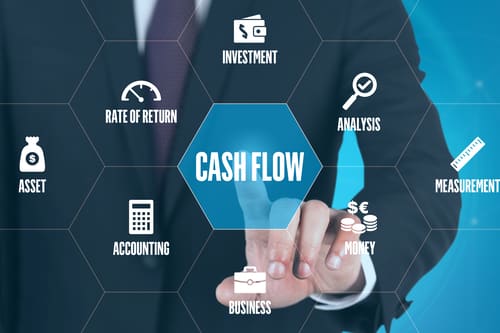
Understanding our cashflow is the key to managing our debt
The new year is around the corner, so have you given any thought to the potential financial hangover you may wake up to in early January? Perhaps you spent too much, even though you created a holiday budget. If you think you might have spent more than you planned, here are some helpful tips to get you back on track before the next big holiday.
Assess how you spend money
Are you an emotional spender who needs to spend all the time? Or are you a careless spender, who doesn’t know or care where your money goes? Perhaps you’re somewhere in the middle. Identifying your spending style and taking positive steps to make a change will put you on the right financial path in the coming year.
Watch where your money goes — Understanding your cash flow
Do you have a personal and/or family budget? If yes, then go through it very carefully. You may be able to find extra money by cutting expenses in less important categories. Calculating your monthly income and expenses — your cash flow — is relatively simple. Simply add up all your income from all sources and the amount of expenses you usually have each month. If you have properly listed all your expenses, including things that aren’t paid out on a monthly basis like car insurance premiums, utilities and other bills, then you’ll have a good idea if you have the money to take on another monthly payment.
Here’s an example of the lists you may have:
Monthly net income.
- Take-home pay
- Bonuses
- Pension
- Dividends
- Social security
- Child support and alimony
- Any other main sources of income in our household
Monthly debt expenses:
- Monthly mortgage or rent payment
- Monthly alimony or child support payments
- Student loan payments
- Car loan payments
- Credit card minimum monthly payments
- Monthly payments for personal loans or any co-signed loans
- Monthly payments for real estate taxes and for homeowner’s insurance (only if they are held in escrow)
- Income Tax Remittance if self-employed
- Note: Do not include monthly expenses for groceries, utilities, gas.
Next, divide your total debt payments by your total income and multiply by 100 to get a percentage result. This is your debt-to-income ratio. Now, you’ll have a comparative percentage to help you understand how much of your income is used up paying monthly debt payments. If your ratio is 35% or less, you’re managing your debt well. If your income turns out to be equal to or less than our monthly expenses, then you’d better postpone or cancel taking on new debt. If it’s between 36% to 49%, you’re managing your debt to an acceptable extent, but your finances may not be able to handle unforeseen expenses. If you’re looking to borrow money, lenders may ask us for additional security to make their final decision. If your ratio is 50% and above, you’re at a critical level; you simply have too much debt. If you fall within either of these last two ratio levels, you should seek professional advice before things go too far. Keep in mind that you are not alone as many Canadians carry debt at 50% to 80% of their monthly income. It’s only after they realize that they no longer can meet the payments, that they’ve borrowed too much.
Pay off the debt and start saving
You’ve done the math and maybe things don’t look too bad. You are practically convinced that you can do this. But if you get away from the numbers a bit and reflect on a few other aspects of your situation, you may reconsider taking on additional debt:
- The reasons for taking on the new debt — the good reasons and the not-so- good reasons;
- What the benefits will be from doing so;
- What effect will this new liability have on other members of your household;
- What other costs will arise from the deal, such as the cost of lost future opportunities because of the need to service this new debt;
- The psychological costs to both yourself and others that stem from the existence of the debt and payment burden it creates;
- And whatever other personal, perhaps non-financial effect all this will impose on us and our family.
Based on your answers, you may decide it’s better to use the cash flow wiggle room you identified in your budget and apply it to pay off your current debts and start a savings program. Remember that it’s possible to change bad financial habits. It’s just requires you to make a concerted effort to simplify your life. By changing your consumer mindset now, you’ll find that you’ve made yourself richer. One way to make the change is by making spending harder. For example:
- Set up a pre-authorized payment program every payday to force yourself to save and pay down your debt.
- Limit your ATM withdrawals and bank fees. Plan your spending and always use cash. You may want to consider leaving your debit card at home, too.
- Put your plan in place. The key to financial success is self-discipline. Keep your eye on your goal. It may hurt at first but after a while your program will feel very natural.
The message here is not to encourage anyone to go into additional debt, but rather to tread carefully if that’s the direction you’re headed and avoid debt situations like bankruptcy in Toronto. If you allow yourself to get too comfortable, you may very subtly, perhaps without realizing it, be giving yourself permission to keep piling it on, which will eventually prevent you from reaching your goal of living debt-free. Remember, going into debt is a choice. At the end of the day, the numbers show that a well-researched, unemotional and honest analysis of your financial situation will pay far greater and better dividends to you than all the fancy baubles that you buy.
Avoid post-holiday debt stress — create a budget

As we get closer to the holiday season, there is one thing we can all agree upon: the holidays stress us out. Whether we’re juggling an increased social calendar, rushing to finish work before the end of the year, or trying to grab that last-minute gift, we’re all feeling somewhat overwhelmed. Along with all this rushing around is a tendency to over spend. We know we probably shouldn’t, but we tend to shrug it off and think about the consequences later. But then the first credit card bill arrives in January and we’re hit with one of the most difficult kind of stresses to deal with: debt stress.
Debt stress has an overarching effect on our lives. It affects our credit score, our financial independence, career choices, well-being and standard of living. In October, Equifax Canada announced that consumer debt continues to rise; in fact it’s up 5.4% since last year. But, we have it in our power to avoid the pitfalls and handle debt properly to achieve positive and desirable results. To ensure we don’t let debt control us it’s important to remember the difference between good debt and not-so-good debt. For example, good debt should leave us better off in the long-term and provide us with lasting benefits. By contrast, not-so-good debt will not provide some increase in value to us over time and tends to reduce our wealth.
Also, another way to control our debt at this time of the year is to understand how much we currently owe. Then we should set a holiday spending budget to ensure we don’t continue to overextend ourselves financially.
Calculate how much cash and debt you currently have: On a spreadsheet or paper and pencil, list your assets (what you own) and your liabilities (what you owe). Now calculate your net worth by adding up your assets and then subtracting your liabilities. If your net worth is positive, you’re doing a great job of managing your money. If your net worth is negative — or “in the red” — it’s time to be honest with yourself and not take on any more debt this holiday season.
Make a list, pay in cash and stick to your plan: Consider this list a mini-budget. Itemize what you realistically think you’ll need over the holidays, like modest gifts, food, refreshments and decorations. Based on the calculation you did above to identify how much you can afford and put an affordable spending limit next to each category. Your goal is to stick to this plan. There are often great sales in November and December, so do your research to find the best bargains.
Enjoy the season: It is possible to have a great festive season without spending a lot of money. Besides, it’s the thought that counts, not the expensive price tag. It’s also possible to use credit with good judgment and with a solid plan to pay it off. Happy holidays!
Richard Killen, Licensed Insolvency Trustee in bankruptcy and author of the new eBook The Glass is Half Full which is now available to be downloaded for free on this page.
A Person in Toronto Asks -Should I Go Bankrupt?

In this video, Richard Killen, a Licensed Insolvency Trustee in bankruptcy with offices across Toronto answers the question.
I don’t know how many times I have been asked by somebody during the course of the free consultation we provide to consumers at the beginning. What do you think, should I go bankrupt?
My answer is always the same for people. Its not up to me to tell you to go bankrupt.
Bankruptcy is a personal decision. What might work for one person, might not work for another person. Although what you can get from a trustee is a good idea of what is going to happen if you do a bankruptcy opposed to a consumer proposal.
So to answer the question, should I go bankrupt? My answer is you need to decide that.
What happens to my tax refund in a bankruptcy or consumer proposal in Brampton?

In this video, Richard Killen, a Licensed Insolvency Trustee in Ontario with offices in Durham region (Pickering & Oshawa) talks about whether a person’s income tax debt can be included in a personal bankruptcy in Ontario.
Something that comes as a big surprise to a lot of people is when they find out an income tax debt, an ordinary income tax debt is something that is dischargeable in a bankruptcy or can be taken care of in a consumer proposal. The people of Durham or people from across the Greater Toronto Area ask me that question numerous times. It is not a strange thing as ordinary income tax debt is treated as a debt.
There is nothing special about the fact it is a debt owed to the government. A debt to the government is not anything special in a bankruptcy situation. Therefore, in a bankruptcy in Durham or anywhere in Ontario, a tax debt is dischargeable.
If you are behind on your taxes or are have other debt problems, consider talking to one of our trustees and debt experts. We can help you review all your options for debt relief.
Contact our Durham office us for a fresh start at (905) 420-6565
Can I Include Income Tax Debt In My Bankruptcy in Durham, Ontario?

In this video, Richard Killen, a Licensed Insolvency Trustee in Ontario with offices in Durham region (Pickering & Oshawa) talks about whether a person’s income tax debt can be included in a personal bankruptcy in Ontario.
Something that comes as a big surprise to a lot of people is when they find out an income tax debt, an ordinary income tax debt is something that is dischargeable in a bankruptcy or can be taken care of in a consumer proposal. The people of Durham or people from across the Greater Toronto Area ask me that question numerous times. It is not a strange thing as ordinary income tax debt is treated as a debt.
There is nothing special about the fact it is a debt owed to the government. A debt to the government is not anything special in a bankruptcy situation. Therefore, in a bankruptcy in Durham or anywhere in Ontario, a tax debt is dischargeable.
If you are behind on your taxes or are have other debt problems, consider talking to one of our trustees. We can help you review all your options for debt relief.
Contact our Durham office us for a fresh start at (905) 420-6565
Can I Cancel My Personal Bankruptcy in Toronto, Ontario?

Sometimes I get asked by people who have recently filed personal bankruptcy whether or not they can cancel their personal bankruptcy in Ontario. Perhaps they have changed their mind and are wondering if their bankruptcy can be canceled?
The short answer is no, the bankruptcy cannot be canceled once it’s filed in the courts and the federal government has issued a number. It’s an official legal process and it’s not going to be canceled outright.
There are different ways to end a bankruptcy and there are ways that a personal bankruptcy in Ontario can be annulled and canceled in a legal way. However, you cannot just change your mind and decide “I want my bankruptcy canceled”. The legal system in place does not work that way.
One of the main reasons you sit down with a Licensed Insolvency Trustee is to go over all your options for debt relief. Usually, personal bankruptcy is the last option considered for debt relief, however, should bankruptcy option be chosen by the consumer, it was likely the best option at the time considering all factors.
Should your circumstances change after filing and you would like to reconsider your options, one of our Trustees would welcome an opportunity to discuss your options.
We can meet with you during business hours or book after hours appointments if that is more convenient for you. Contact us at (888) 545-5365.
How Long Will My Bankruptcy Last in Ontario?
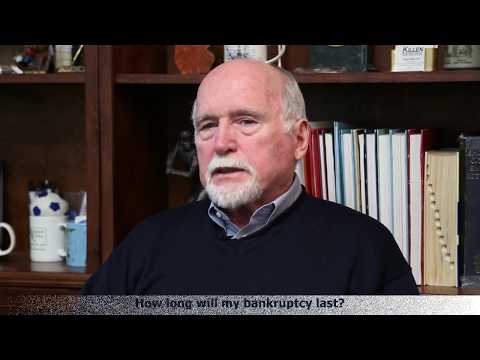
In this video, Richard Killen, a Licensed Insolvency Trustee in bankruptcy Toronto talks about, How long a Bankruptcy lasts.
There tends to be some general misunderstanding about how long a bankruptcy lasts. People hear things about this 7 years business, not being able to obtain credit, and things like that. But, essentially a bankruptcy is a legal process, it has a beginning and it has an end. It begins when you file for bankruptcy. It ends when you are discharged from the bankruptcy and therefore from your debts. So, how long will it last? Well, for the majority of people who have gone bankrupt, it’s their first and hopefully only bankruptcy, they are eligible for the discharge to take place in nine months. If they earn above a certain pre-set amount, an amount the Government sets for your monthly income, then if you earn more than that, bankruptcy might be extended by 12 months, from 9 to 21 months. If you have been bankrupt once before, you are going to be eligible to be discharged automatically in 24 months, not nine. And if you earn again, above that amount, then you will get the 12 months tacked onto that too, so you will end up being bankrupt for 36 months. So, generally speaking, a person goes bankrupt, they are bankrupt either 9 or 24, or 21 or 36 depending on the circumstances. Now, there are other factors that come into play, that could extend the bankruptcy, it would result in a person having to go to court to get their discharge and all that. Now, those are the kinds of things a Trustee needs to explain to you. And there are so many different variables.
If you are uneasy about bankruptcy you should definitely visit a licensed insolvency trustee so that you will be given an advice about your bankruptcy problems.
What Happens To My Job If I Go Bankrupt In Ontario

In this video, Richard Killen, a Licensed Insolvency Trustee in bankruptcy in Ontario talks about if your job is affected by a bankruptcy.
Generally speaking, a person’s employment is not affected by a bankruptcy and not affected negatively by a bankruptcy. In fact, in may be affected positively by a bankruptcy. This is because you might be able to focus a lot more on your job if you don’t have to worry about your debts. However, in terms of any legal effects of a bankruptcy or proposal, there are some professions where it is effected, chartered accountants, for instance, lawyers, people who operate trust accounts like real estate brokers, things like that. There would be some negative affect of going bankrupt for people in those positions. But, for the vast majority of us, nope, the main effect is often positive. So, to answer the question, don’t be afraid of your job being affected negatively by either a bankruptcy or consumer proposal.
If you have debt problems and are concerned about how it may affect your job, I encourage you to call our office and talk to a trustee.
Is A Payday Loan A Good Idea?

In this video, Richard Killen, a Licensed Insolvency Trustee in Bankruptcy Scarborough talks about whether a Payday loan is worth considering.
I guess one can say that going into debt, any kind of debt, is hardly ever a good idea. Usually, the cost of the debt outweighs whatever benefits you may get from borrowing the money. However, sometimes debts make a good case for making some worthwhile. For instance, is a mortgage worthwhile? Because you borrow a large amount of money for buying a house, you are going to pay back that money with interest but the house will appreciate in value. And over time that appreciation more than outweighs the cost of the debt. Maybe that kind of debt is a good idea.
Ultimately, it always boils down to whether the cost too much and how much is the cost? Now there is going to be interest on any loan and that is what you must consider. Now, unfortunately, Payday loans are on the high end of all interest calculations so one can say that it is tough to say if a Payday loan is worth it.
If a Payday loan is a part of your coping with bills, you should consider having a consultation with one of our trustees. It may be the most stress relieving call you make this year.
Licensed Insolvency Trustee Advice: 4 Things for Debt Solutions

In this video, Richard Killen, Licensed Insolvency Trustee based in Toronto, Scarborough, and 8 other debt relief locations in Ontario talks about 4 important things to keep in mind before deciding on a Licensed Insolvency Trustee.
When people start looking for insolvency solutions, they are usually operating under a fair amount of stress for quite some time. Which is why you should always keep the following in mind before you go any further in your search.
- Always use a Licensed Insolvency Trustee (LIT) – this is one of the best ways to ensure that you’ll be able to handle all the stress associated with bankruptcy procedures. Richard Killen and Associates is licensed by the federal government to administer the processes provided by law which is the quickest way to deal with all the stress and worry you may be experiencing.
- LIT will review all your options with you – an LIT is legally obligated to review all your options and help you make the right decision based on your financial situation.
- Stress relief happens immediately – some may be reluctant to visit an LIT due to the negative impression of filing for bankruptcy. Fortunately, LIT can offer bankruptcy alternatives and explain to you all of them which alleviates the stress of feeling like you have no other options.
- Misinformation – there has been so many myths and false information available today about bankruptcy and the insolvency process that you shouldn’t immediately believe. The Bankruptcy and Insolvency Act – the law that we operate under – provides bonafide solutions to problems that can’t be solved in any ordinary manner. These are solutions that work.
So remember, only a Licensed Insolvency Trustee can work with you and show you all of your options and help you find the right solution for yourself and we can put that solution into effect as soon as possible.
There is no cost for your initial meeting and we will explain all of your options to you. We can meet with you during business hours or book after hours appointments if that is more convenient. Richard Killen and Associates is a Licensed Insolvency Trustee in Scarborough and have 10 locations across the Greater Toronto Area. Call us at (416) 285-9511
Contact Richard Killen
FREE No Commitment Consultation
Contact us now for a fresh start!
“Serving Toronto & the GTA for over 25 years.”

Recent Blog Posts
- Why More Canadians Are Choosing Consumer Proposals for Debt Relief and Financial Recovery
- Consumer Proposal vs. Bankruptcy in Ontario: How Income and Assets Decide Your Best Route
- Are You Managing Debt or Just Surviving It? 10 Warning Signs It’s Time to Seek Debt Relief Solutions in the GTA
- Borrowing for Home Renovations in the GTA: Questions to Ask Before Taking on More Debt and How an LIT Can Help
- Back-to-School Expenses Are Adding Up: How to Prepare Without Going Into Debt Help Ontario