


Will Bankruptcies Increase as Economy Improves?
 As the outlook gets rosier for the Canadian economy, those in deep dept may pay the price with bankruptcy.
With the U.S. economy expected to undergo a widespread recovery next year, Canada will likely fall suit, with rising interest rates as well. Normally this would be good news. However, Canadians are going into the biggest shopping season of the year staggering under the load of a record $1.51 trillion in debt.
Our debt levels significantly outstrip those of American consumers. Excluding mortgages, our average debt has increased 2.7 per cent to $20,891, a recent article in the Globe and Mail points out.
On the tipping point
Lulled by five years of rock-bottom interest rates, we have taken on mountains of debt. While an improvement in the economy would normally be accompanied by a fall in the number of bankruptcies, our financial situations are so precarious that a small rise in interest rates could have disastrous consequences.
“We might see bankruptcies rising alongside interest rates,” affirms CIBC economist Benjamin Tal in a Huffington Post article.
Holiday hangover
With a frenzied beginning to the holiday buying season – seen in the Canadian embrace of America’s Black Friday madness – all indications are that household debt will go even higher, as December’s credit card bills become due in January.
Homes and cars
Many Canadians have been lured into the housing market with low interest rates, even though house prices have soared in key markets. In Vancouver, for example, the average price of a single-family detached home is now close to, gulp!, $1 million.
Overall there has been a marked increase in mortgage debt that puts many at risk if we see an increase in interest rates.
Auto loans and installment loans have been responsible most of the debt increases, up 6.8 per cent and 5.8 per cent respectively, Equifax Canada points out. Installment loans are loans with fixed monthly payments, which can include loans us for cars, furniture or home renovations.
Not all bad news
While our debt levels have come up, delinquencies and bankruptcies have actually gone down in recent quarters. Perhaps people are more determined to live within their means, or they have become aware of how precarious their situation is.
If after the turkey leftovers are gone, and the bill statement begin to fill your mailbox and email inbox, you feel that your debt situation is getting out of hand, call us at Richard Killen & Associates.
As one of Toronto’s friendliest and most respected Licensed Insolvency Trustees, we’ll sit down with you for a free assessment. We will lay out your options, whether it is taking an amalgamation loan, negotiating with creditors, offering a consumer proposal or going into bankruptcy and starting again with a clean slate.
Let it be a very Happy New Year for everyone.
How to Lower Your Heating Costs

As the cold weather descends, Canadians are faced with their annual challenge of how to stay warm without breaking the bank – especially as the cost to heat homes rises. To lessen the damage to household budgets caused by high fuel costs, here are five common-sense steps you can take:
1. Turn Down the Heat
By setting your thermostat to 20 degrees, you may be able to reduce your heating bill by 5 to 10%. If it seems chilly, wear a sweater and warm socks. And keep in mind that while you were sweltering in 30-plus degree temperature in the summer, you would have killed for 20 degrees. And reduce your heat another four or five degrees when you are out of your house or gone to bed (saving another 15% in heating costs). Studies show people sleep better in cool rooms.
2. Heat Only What You Use
Shut the doors and close the vents of the rooms you’re not using, so you only heat the rooms you’re living in. On the other hand, do heat the basement, even if you don’t descend to its depths often. A cold basement will make the first floor of your house feel cold.
3. Get Rid of Cold Drafts
Cold drafts are uncomfortable and a reminder that as cold air seeps into your house, hot air is leaking out. Feel for the drafts around window and door frames, and install weather stripping where needed. You might also consider covering some windows with plastic, to keep heat in, and at very least covering the windows with blinds or curtains at night.
4. Control Your Fireplace
Yes, it’s great to have a wood-burning fireplace, providing heat and cheer. But when the fire isn’t burning, the hot air is sucked up the chimney. So close the flue.
5. Ensure That Your Furnace Works Efficiently
You should get your furnace inspected and tuned every one to two years, so that it runs safely and efficiently. In between servicing, making sure that the filter is clean. And if your furnace is old and inefficient, think about replacing it with a new, energy-efficient model, the short-term cost will be recouped after a few cold Canadian winters.
Staying warm is an annual Canadian challenge that we have become very adept at meeting. But, there are other challenges that we must face from time to time such as when we find our debts outrunning our income and our ability to pay them. This too can strain our household budgets and eventually affects large parts of our lives. Well, there are different ways of meeting that challenge and one of the best is to call Richard Killen & Associates and take advantage of the free consultation offered. It is a sure-fire way of staying warm during that kind of “weather” crisis.
Consumer Proposal Rejection?
 So the consumer proposal that you’ve filed in Ontario will soon be presented to your creditors. You’ve worked with a Licensed Insolvency Trustee, such as Richard Killen & Associates, to come up with a reasonable payment plan for your debts They helped you fill out the necessary forms and filed them for you with the Official Receiver.
Protections are in place
As soon as the consumer proposal is filed a legal protection goes into place – automatically. This means that none of your creditors can start, or continue, any collection effort against either you, or your property. In other words, all your creditors must direct their attention to your proposal, through the trustee. (In a consumer proposal the trustee’s title becomes “administrator.”)
Like most things in the law, there is an exception to this general principle. In this case a secured creditor, like a mortgage holder, can enforce his security rights under his contract with you. So if you wanted to keep your house or car, you would have to keep up your payments, or the creditor would have the right to repossess it from you. So that creditor can’t be included in your proposal.
But, as far as regular, unsecured creditors, you don’t make any more payments towards those debts because they will get paid through your consumer proposal. There is no point in their continuing to write to you, call you, demand payments from you, put the account in collection, garnishee your wages and so on, because the proposal has taken over your obligations to them.
So you’ve filed. What happens next?
Once the proposal is filed, the administrator must tell your creditors about it. A copy is sent to all of them and they are invited to file a claim to let you know, within 45 days, whether they are in favour of your offer or not. If they are, which is what normally happens, then you’ve got a deal. If not, we will have to have a meeting with the creditors, where everything can be discussed and eventually voted on.
To be approved at a vote, all it takes is a simple majority. The creditors get one vote for every dollar you owe them. That means the larger creditors are more important than the little ones. To be accepted your proposal must get 50% plus one vote.
Wondering what your chances are that the creditors will accept the proposal?
Your chances are good
While we cannot guarantee that any proposal offer will be successful, the vast majority of these legally binding settlements that we negotiate are accepted. The trustees at Richard Killen & Associates take a lot of time and effort to understand your situation – including what level of payments you can afford – and have a lot of experience in dealing with creditors. We generally know what they are likely to accept. In short, we listen to them and we listen to you, and then help you craft a compromise that both you and your creditors can live with.
Why not handle it yourself?
The big advantages of doing a consumer proposal instead of handling negotiations with creditors yourself are:
- The filing of the proposal takes away the creditors’ other options; they must come to the table.
- You don’t have to get everybody to agree. The majority rules.
- A proposal works with all your creditors collectively.
- You don’t have to pay 100% of the debt. You can reach a compromise amount.
If the creditors representing the majority of the dollar value of your debt vote to accept the proposal, then it will become legally binding on all the creditors (and you).
Initial rejection is not the end
Though it is not a great sign, a rejection of your proposal, along with a subsequent meeting, is just part of the process. It usually means the creditors want you to offer more money, but this amount is still under negotiation. You still have the opportunity to make a deal. The trustee will continue to work with both sides to come up with an acceptable compromise. Often by adding a few dollars to the monthly payments, or by extending the payment period by a few months, the creditors will be satisfied.
So, is a proposal better than bankruptcy?
That is a good question. We get asked it a lot.
Very few people want to go bankrupt. They do so because they have to. Doing a proposal avoids bankruptcy, but whether it is the right move depends on individual circumstances. Only you can really answer that question.
For the creditors, it usually boils down to how much money they will receive. Creditors are keenly aware that what’s been offered them is better than what they’d receive in a bankruptcy. They know that if they come back and ask for too much more money that they may make you believe that a bankruptcy is the better way to go. They don’t want that either.
Whether a proposal or a bankruptcy is the right way for you, is something you need to discuss with the trustee. That’s what we at Richard Killen & Associates are here for. Call us.
And again, don’t worry too much. At the end of the day, most reasonable consumer proposals in Ontario are accepted.
How To Rebuild Your Credit Rating
 Your credit rating has taken a beating. You regularly pay bills late. Sometimes you can’t make even minimum payments. Perhaps you’ve gone through a bankruptcy or the consumer proposal process.
But what now? How do you rebuild your credit rating?
Find Out Where You Stand
First, to see where you stand, get your sactual credit rating from TransUnion Canada or Equifax Canada.
OK, you’ve absorbed the bad news. If you’ve gone through the bankruptcy or consumer proposals process with a licensed trustee such as Richard Killen & Associates, you would have had some credit counselling sessions that would give you valuable advice about how to manage your finances and restore your credit rating.
Replace Bad Credit With Good
You would be shown, for example, how to use credit wisely. You should buy only what you can afford to pay back and make payments on time. In fact, all your bills should be paid on time.
Simple to say, hard to do. The credit counselling sessions provided by Richard Killen & Associates Ltd. will give you strategies on how to achieve this discipline.
As a credit-redeeming strategy, you might even want to purposely get a loan, though it will probably be at a high interest rate. Just borrow $1,000 or so and make sure you make your monthly payments religiously. Automatic debit from your account is probably the best way to ensure that. After six months or so you’ll be receiving an R-1 rating from this creditor. That’s a start.
But Don’t Go Overboard
The loan-on-purpose strategy notwithstanding, you shouldn’t get too much credit. The more you have available to you, the more tempting it is to use. Having too much credit can also hurt your credit report. So do not fill in too many applications for credit and loans because every time you do, your credit history is checked, which can affect your score.
Get a Secured Credit Card
A secured credit card requires you to have a balance. So, for example, if you have a balance of $500, then you might have a credit limit of $500, maybe more depending on the creditor and your arrangements. In effect, it is a no-risk or small-risk credit card. But the very act of using the card and paying your credit card bills on time will help to restore your rating.
No Minimum Payments
Get in the habit of paying your bills, especially your credit card bills, in full, rather than making a minimum payment and carrying the balance. We can’t stress this tactic too much. It is the key to good credit card management.
There are many strategies you can use to get back to financial health. The best first step could be a free consultation with a licensed trustee at Richard Killen & Associates Ltd., who will help you to understand your options in dealing with credit challenges.
Rich, Richer. Poor, Poorer
 Apparently the wealth gap is growing in this country, as the rich get richer and the poor get poorer.
So says the Broadbent Institute, supporting its case with StatsCan numbers. Canada’s poorest 10% saw their net worth plummet some 150% since 2005, while the top 10% jumped nearly 42% during the same time, with a median net worth of $2.1 million.
While a growing income gap has been well reported, the wealth gap is an even broader measure, taking into account all assets, including housing and investment, minus debts.
“Contrary to rosy reports of rising net worth and a post-recession recovery, these new numbers sound the alarm on Canada’s wealth inequality problem,” says Rick Smith, executive director of the Ottawa-based think tank, in a Toronto Star article.
By 2012, the bottom 10% saw their debts outweigh their assets by $5,100. Seven years earlier, this number was only $2,000. The bottom 50% of Canadians own just 6% of the wealth, while the bottom 30% own just 1%, the institute says.
“Looking at this broad picture of wealth using new Statistics Canada data released to the Broadbent institute, this report shows deep and persistent inequality,” the institute adds. “This unequal distribution . . . challenges the narrative that suggests Canadians are getting wealthier across the board.”
If you find your own wealth gap growing, with debts overwhelming your assets, then come to Richard Killen & Associates for a free consultation, to see how you can start trending in the right direction.
Cheap Summer Fun in Toronto
 We all like to take nice summer vacations. But long car trips, travel abroad, cottage rentals and even camping can strain the pocketbook. If you are trying to save money this summer, why not stay in the city and enjoy some of its pleasures?
Yes, Toronto has lots of pricey entertainment options. But it also provides many inexpensive and free choices for the budget conscious. For example, you can enjoy:
Cheap Shakespeare
For yet another summer Canadian Stage presents its popular Shakespeare in High Park series. To take in the Bard under the stars with a blanket and picnic, you can pay what you like at the gate or reserve tickets online. This year the lighthearted As You Like It and the intense Titus Andronicus are performed on alternate nights. Gates open at 6 p.m. and the plays start at 8 p.m.
Cheap Laughs
Toronto has its share of inexpensive standup and sketch comedy and improv nights. Here is a listing of some of best places to get a laugh in the city, ranging from stalwarts like Yuk Yuks and Second City to up-and-comers that include the Rivoli and Black Swan.
Cheap Board Games
Like to play games? Good, go to the Snakes and Lattes Board Game Café, where you’ll pay a paltry $5 cover charge, order something to drink (for as little as $2) and the pick a game from the more than 2,300 choices that line the shelves. Don’t know what to play? Then ask one of the café’s “Game Gurus.” As its site explains, they “are like wine sommeliers. Not only will they try to help find you the right game for your group, they’ll go on and explain how it’s played.”
Cheap Drinks
Drinking at bars can be an expensive pastime. Thank goodness for Nirvana . . . as well as other cheapo swilleries such as The Rhino, Einstein’s and Java House. Yes, you’ll find $10 jugs of draft, two-for-one specials, $3 mixed drinks and more. You will also save on gas, because you should drive to these high-volume, low-cost joints, which are listed here.
Cheap Movies
Not just cheap but free. Toronto has an abundance of outdoor venues to enjoy film screenings, ranging this summer from Les Vacances de Monsieur Hulot to The Adventures of Priscilla, Queen of the Desert. Venues range from Harbourfront to Yonge-Dundas Square to Christie Pits.
Scared to Death of Taxes
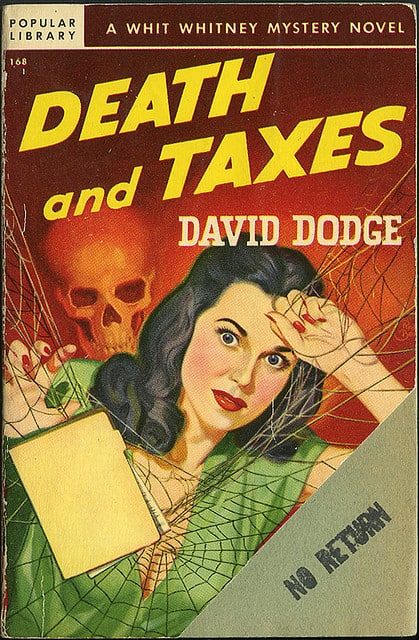 Death and taxes are inevitable. For some they are the same thing.
Fear of the tax man may be justified. As a creditor he has super collection powers that ensure that most people don’t have a smile on their face when they receive a notice from the Canadian Revenue Agency (CRA).
Among the things the agency can do are charge penalties and interest on all overdue accounts, withhold child tax credits and GST credits, and garnishee your bank account and pay. Without your consent, it can register a lien against your home. And it can take actions without going through a court process, as other creditors are forced to do.
But the news is not all bleak. Some people labour under the misconception that tax debts are not included under a personal bankruptcy. They in fact are, so when you receive your bankruptcy discharge, back taxes are usually included.
This is, if you owe the government less than $200,000 in back taxes. If you owe more in personal income tax debt, representing 75% or more of your total unsecured debts, then you must appear in bankruptcy court to decide if any conditions should apply to your discharge.
If you are undergoing a bankruptcy, then some special handling of your income taxes is required. The trustee will prepare two tax for you during the course of a year. A pre-bankruptcy income tax return must be filed from January 1 to the date of bankruptcy. Then a post-bankruptcy return must be filed from this date to the end of December.
If there are any funds in a return from the post-bankruptcy filing, then they are paid to creditors. Any taxes owed prior to the bankruptcy are discharged. And if there is an amount owing the government on the post-bankruptcy tax return, then it is up to you pay it.
Negotiating the ins and outs of taxes and bankruptcy can be a tricky and delicate process. Consult an expert at Richard Killen & Associates so you can discover your options and keep the tax man off your back.
It’s the Little Savings That Count
We all know about the big buys that do damage to our bank accounts: homes, cars, vacations, etc. But equally insidious are the small regular purchases that we don’t really notice but add up over time, whether it’s expensive designer coffee or unused gym memberships. Here are five things you can do without, or with less of, to plump up the pocketbook.
1. Stop Going to Coffee Shops
Do you get a nice coffee from Starbucks or Timmy Ho’s everyday before getting down to work? You can be spending a couple of bucks a day or much more if you are getting some of the premium coffee-based drinks. For less than you spend in a month in coffee shops you can get your own coffee machine at home (for under $20 at the low end!) and a pound of something fair trade and delicious. That way, when you treat yourself out, it is a treat and not part of the daily grind of starting your heart for work.
2. Give up Your Gym Membership
Lots of us have unused gym memberships, meaning we’re paying hefty monthly fees for no reason. So give it up. This is not to say you should give up exercise. Do more at home. Take up walking or bike riding and, if you live close enough, bike it or hoof it to work, saving big bucks on the gas and parking of a car commute. If you like to do your aerobics or Pilates in a group, check out the local rec or community centre, where classes may be cheap or even free.
3. Stop Impulse Buying
If you’re thinking about buying something you’re not sure that you really need, make yourself wait 30 days before making the purchase. Often the impulse will pass. Or if you’re in a store shopping and see something you want to buy on the spur of the moment, circle way and wait 20 minutes before picking it up. Your consumer desire may wane. And when grocery shopping, make a list and stick to it. Yes, the tub of Häagen-Dazs may be half price but it doesn’t save you money if you weren’t planning t0 buy it in the first place.
4. Save Money on Your Entertainment Media
Spending too much on your cable TV package and pay per view? Then downgrade or eliminate your service and get movies and TV shows through low-cost services like Netflix and Redbox. Or better yet read a book. Don’t buy a book but go to your library and take one out. It’s free. You can also take out movies and even put a dent in your iTunes habit by renting CDs of music that you can rip to your MP3 player (ask your kids how).
5. Check Your Phone Plan
If you have a cellphone, check your usage to see if your plan is the most economical one for you. Also, since signing on, the phone company may have introduced lower priced plans, with unlimited Canada-wide calling for example, that they are in no hurry to tell you about. And you may be able to negotiate lower rates than the ones offered. But don’t do this at the phone company’s retail shop. They have to stick to the listed prices. Call your phone company, make noises about quitting and when they pass you on to their retention expert, swoop in and make a deal, citing the low prices to be had elsewhere (do your research). Also, if you don’t use your cellphone much, consider switching to a pay-as-you go plan. And finally, if you have both a cellphone and landline, get rid of one. Just because you grew up with a rotary phone doesn’t mean you need one now.
There are probably many other things going on in your life that drain your financial resources without giving you much (or any) value in return. Sit down and make an inventory. You’ll very likely shock yourself. Remember, you are supposed to be in charge of your life, not Starbucks.
Pre-Retirement Canadians Embrace Mortgage Debt
 People looking forward to retirement usually try to retire their debts first, especially their mortgages, so they can enjoy their leisure without financial worries. But a story in the Globe and Mail reveals that more and more Canadians are going into their golden years with a substantial financial burden.
“Pre-retirement Canadians in the their 50s are taking on an alarming amount of debt and are most at risk of bankruptcy,” says April Dunn, owner of the Red Door Mortgage Group in Vancouver, citing a new study that examined about 7,000 insolvency filings. She reveals in the Globe interview that about half of all retired people in this country are carrying debt, “with many stuck managing two or more payments a month.”
Even so, not all of these people are getting into debt as a desperate measure. Some want to free resources for other uses and believe they have the wherewithal to manage their debt. Others are seeking to take advantage of historically low interest rates, or they are leveraging their property to pass money to their kids, so they can perhaps buy their own homes.
How Much Is Too Much?
 People sometimes ask: “If I go bankrupt will the trustee take all my income?” Well the simple answer is NO. But to understand that answer you need to wade through some layers of legal complexity.
While you go through bankruptcy, the trustee is required to monitor your income to see if maybe some part of it should go to your creditors. Remember, you have stopped making any payments directly to those creditors, so they are not getting anything from you. But, assuming you’re working and have income, it’s fair to ask whether any portion of your income should go to the creditors.
In the old days this question had to be answered by the court on a case-by-case basis. But since the early 1990s, the courts couldn’t keep up with the rising number of bankruptcies, so the government decided to let the trustee handle this question. After all, the trustee takes care of practically everything else. However, to ensure that consistency and fairness is maintained across the country, the government gave the trustees a strict formula that enables them to work out a solution that is fair and protects both your rights and your creditors’.
Every year, using the latest cost of living statistics, the federal government sets a “Standard” based on how many people live in a household. (Obviously the more people in the house, the more money these people need to get by.) This standard establishes a threshold. If your family income exceeds the applicable threshold, you are deemed to have “Surplus Income.” If you have a surplus, you may pay half the amount to a trustee for the benefit of the creditors. The formula is fair and most people have no problem with it.
Here’s an example: You’re part of a family of two who has a total combined after-tax income of $2,908. This is exactly $400 more than the standard threshold for a two-person family ($2,508). So the bankruptcy law requires you to pay half of this $400 surplus income, $200, to the trustee for the creditors. The Industry Canada website has all the details.
While this formula is fair, it can get complicated, especially since everyone’s situation is different. For instance, you have the right to question and disagree with whatever number the formula comes up with. There is a mediation procedure in place that can help you to work out a compromise.
Since the issue of surplus income may affect your decision about what course to take to solve your debt problems, you need to know the facts and your options. The best way to do this is have a trustee at Richard Killen & Associates explain them to you. It doesn’t matter how much surplus income you may or may not have, the consultation with us is truly FREE.
Contact Richard Killen
FREE No Commitment Consultation
Contact us now for a fresh start!
“Serving Toronto & the GTA for over 25 years.”




Recent Blog Posts
- Why More Canadians Are Choosing Consumer Proposals for Debt Relief and Financial Recovery
- Consumer Proposal vs. Bankruptcy in Ontario: How Income and Assets Decide Your Best Route
- Are You Managing Debt or Just Surviving It? 10 Warning Signs It’s Time to Seek Debt Relief Solutions in the GTA
- Borrowing for Home Renovations in the GTA: Questions to Ask Before Taking on More Debt and How an LIT Can Help
- Back-to-School Expenses Are Adding Up: How to Prepare Without Going Into Debt Help Ontario